As an Amazon Associate I earn from qualifying purchases. This post contains affiliate links. If you buy through them we may earn a commission at no extra cost to you.
Product prices and availability are accurate as of the date and time indicated and are subject to change. Any price and availability information displayed on Amazon at the time of purchase will apply to the purchase of this product. Certain content that appears on this site comes from Amazon. This content is provided "as is" and is subject to change or removal at any time.
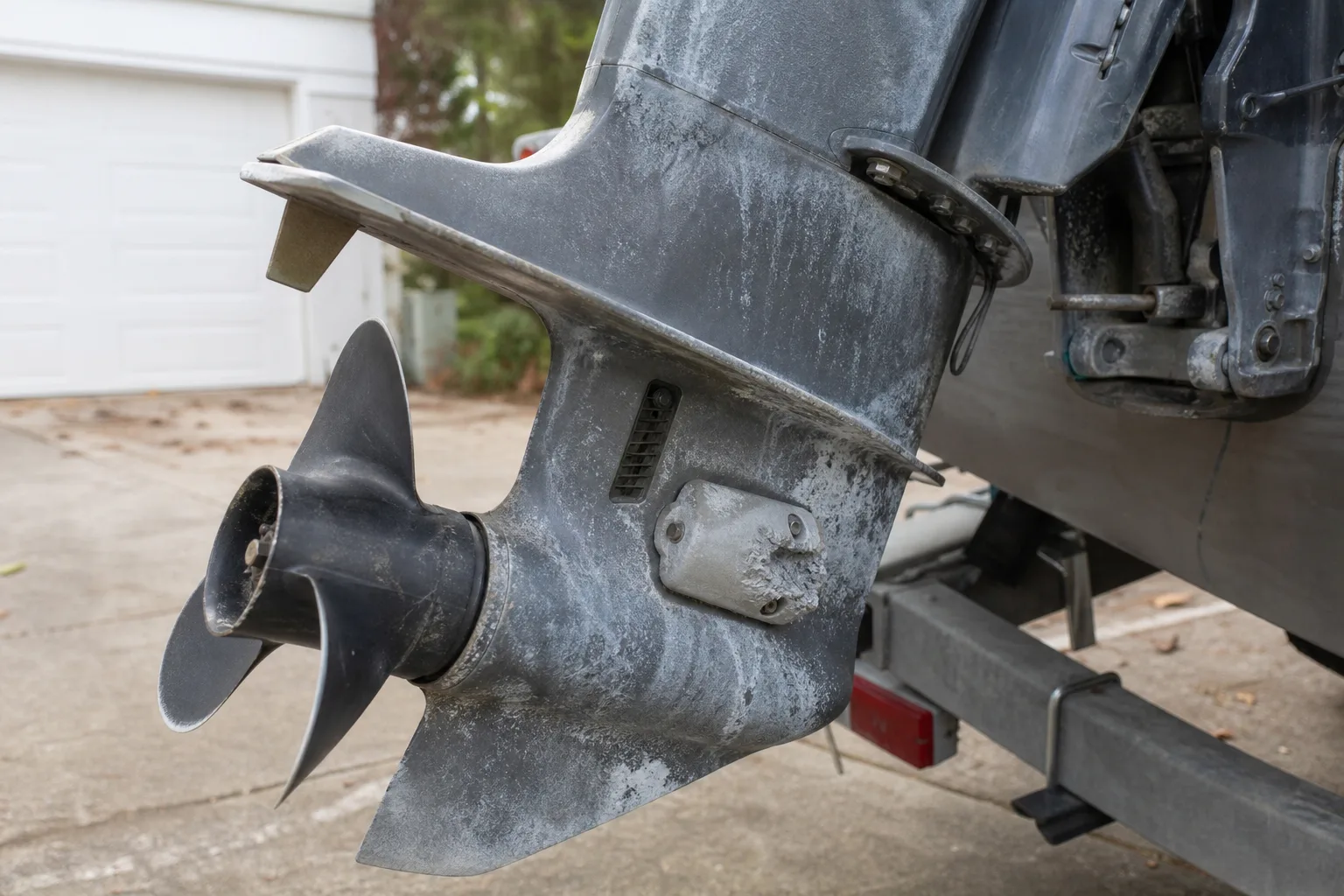
Those dull metal blocks bolted to your outboard are anodes, and their whole job is to corrode so the motor doesn’t. A trim tab anode runs about $15 to $30 depending on the motor, which makes them the cheapest insurance on the boat by a mile. They’re also the part everyone forgets until the lower unit starts looking chalky and pitted.
Before you mix a can, check it on the free 2-stroke fuel mix calculator — it also says which oil an outboard actually needs.
Getting them right comes down to the metal matching your water, clean contact where they bolt on, and swapping them before they’re gone. Here’s how I handle all three on my own motor, and it fits into the seasonal part of the maintenance schedule I keep.
What the anode is doing down there
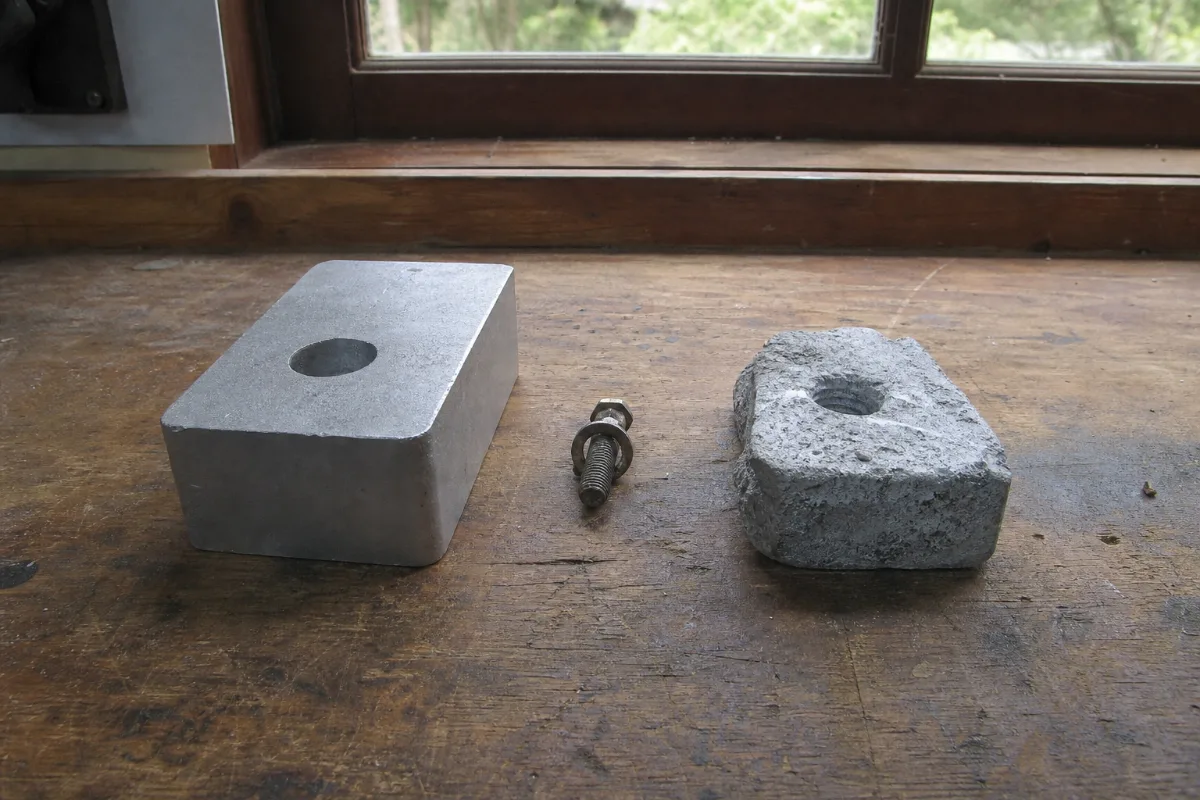
Two different metals sitting in water, connected to each other, make a weak battery. The more active one gives up material to protect the other. That’s galvanic corrosion, and without an anode in the picture, the aluminum your lower unit is made of would be the metal giving itself up.
So the manufacturer bolts on a lump of something more active than that aluminum. The anode corrodes first, and while there’s still some of it left, the housing around it is protected. Once the anode is gone, the aluminum is next in line.
That’s the whole idea, and it’s cheap and simple. It only works if the anode is the right metal for your water, actually connected to the motor, and still there.
Water type matters because salt water conducts far better than fresh, so the whole process runs harder and faster at the coast. That’s why a lake motor can go a couple of seasons on a set of anodes while the same motor in salt water needs looking at every few months. Same chemistry, very different pace.
Zinc, aluminum or magnesium
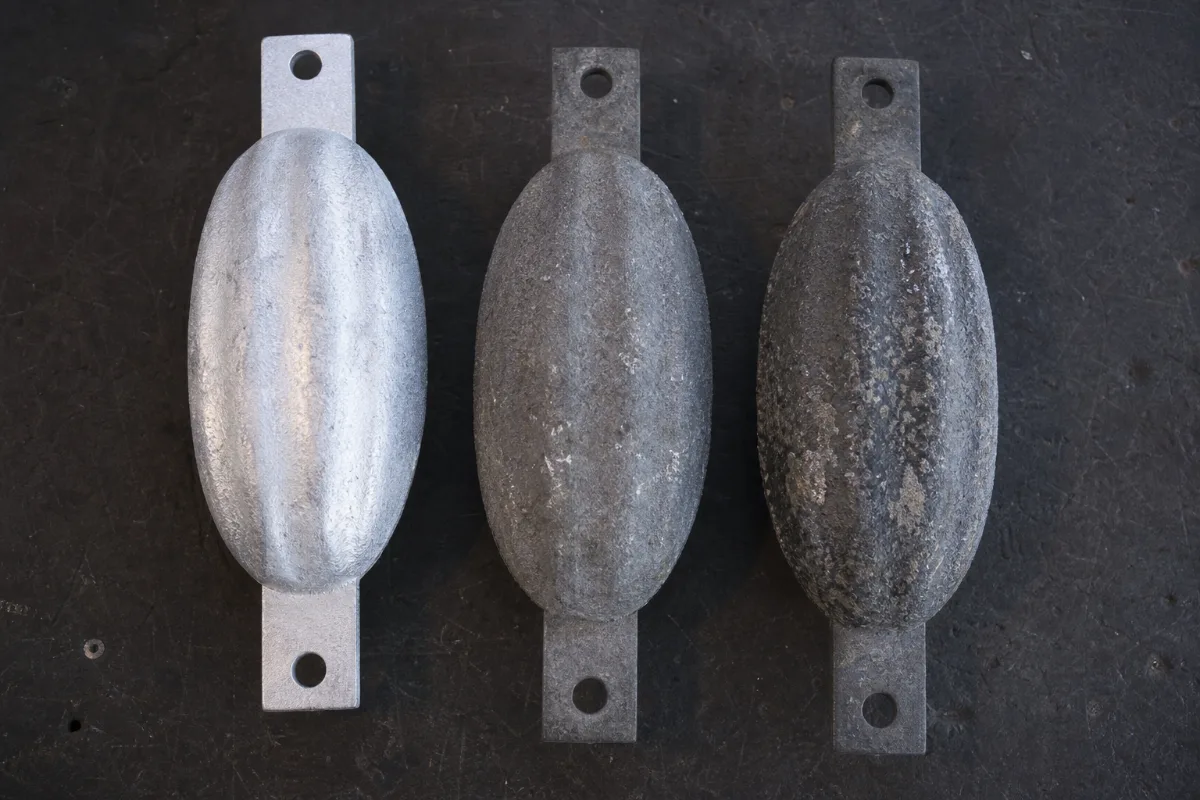
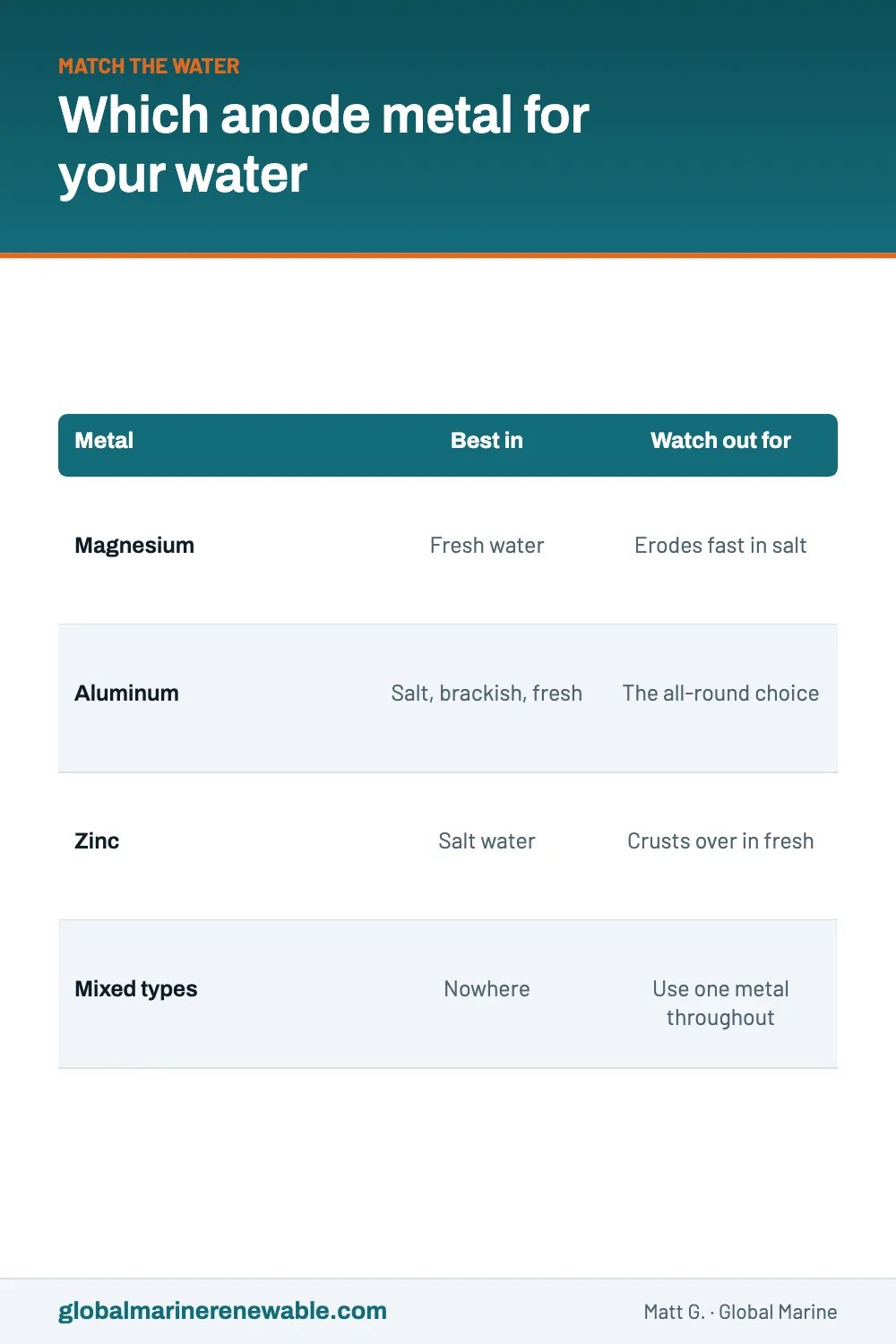
The metal has to match the water you run in, and this is where people get it wrong without ever knowing.
- Magnesium is the most active of the three, and it’s meant for fresh water only. Put it in salt water and it is consumed very fast, which makes it the wrong choice for the coast.
- Aluminum works in salt and brackish water, and it works in fresh too. If you trailer between a lake and the coast, this is the easy answer.
- Zinc is the traditional saltwater metal. In fresh water it can build up a crust that insulates it, and an insulated anode protects nothing at all.
Manufacturers say to use one type throughout rather than mixing them on the same boat, and honestly that’s easy advice to follow. Pick the metal that matches where you run, and put the same thing everywhere.
One more thing that costs nothing: rinse the motor after a salt trip. Flushing gets the salt out of the cooling passages. Hosing the outside down doesn’t touch the galvanic corrosion the anodes handle, but it keeps salt off the paint and the fittings, and that’s worth the 2 minutes. I do it on the ramp apron before the boat even gets home, while the motor is still on the trailer and I’m still wet anyway.
Where the anodes hide on a small outboard
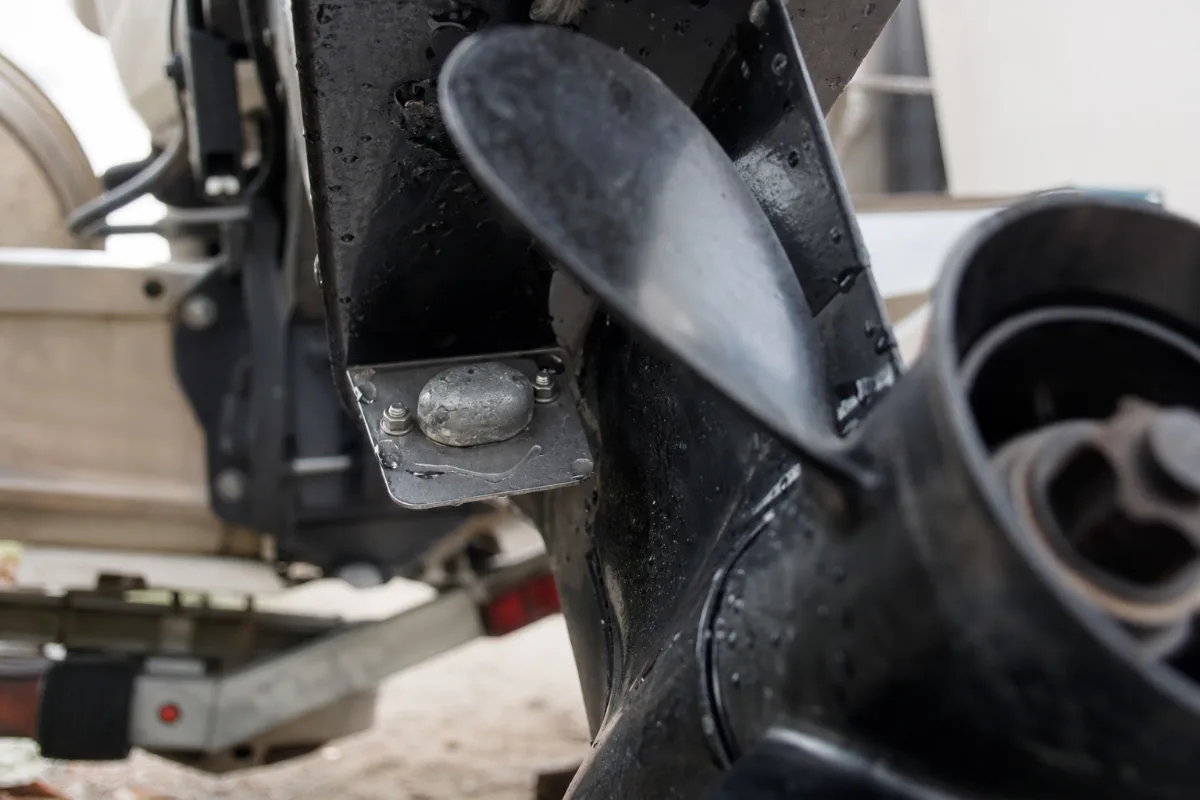
They aren’t all in one place, which is exactly why people miss some.
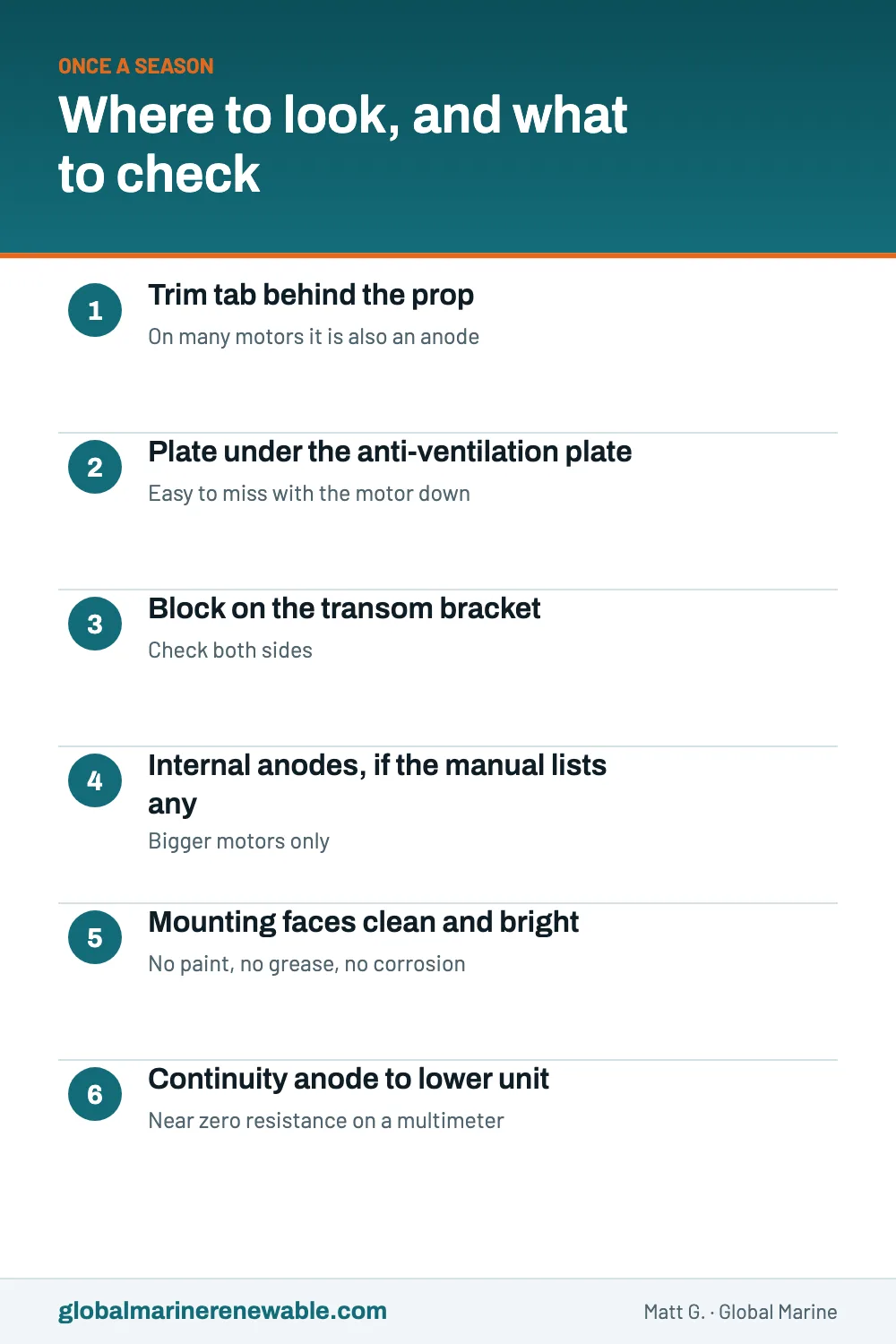
- The trim tab behind the prop, which on a lot of motors doubles as an anode
- A plate or block under the anti-ventilation plate
- A bar or block up on the transom bracket
- On some bigger motors, anodes inside the cooling passages that only the service manual will show you
Your manual has the map. Take 5 minutes and find every one of them once, with the motor tilted up and a flashlight, and after that you’ll know where to look each season. Most of them come off with 1 or 2 bolts. I found a fourth one on my motor two years after I bought it, which was a humbling afternoon.
When to replace them
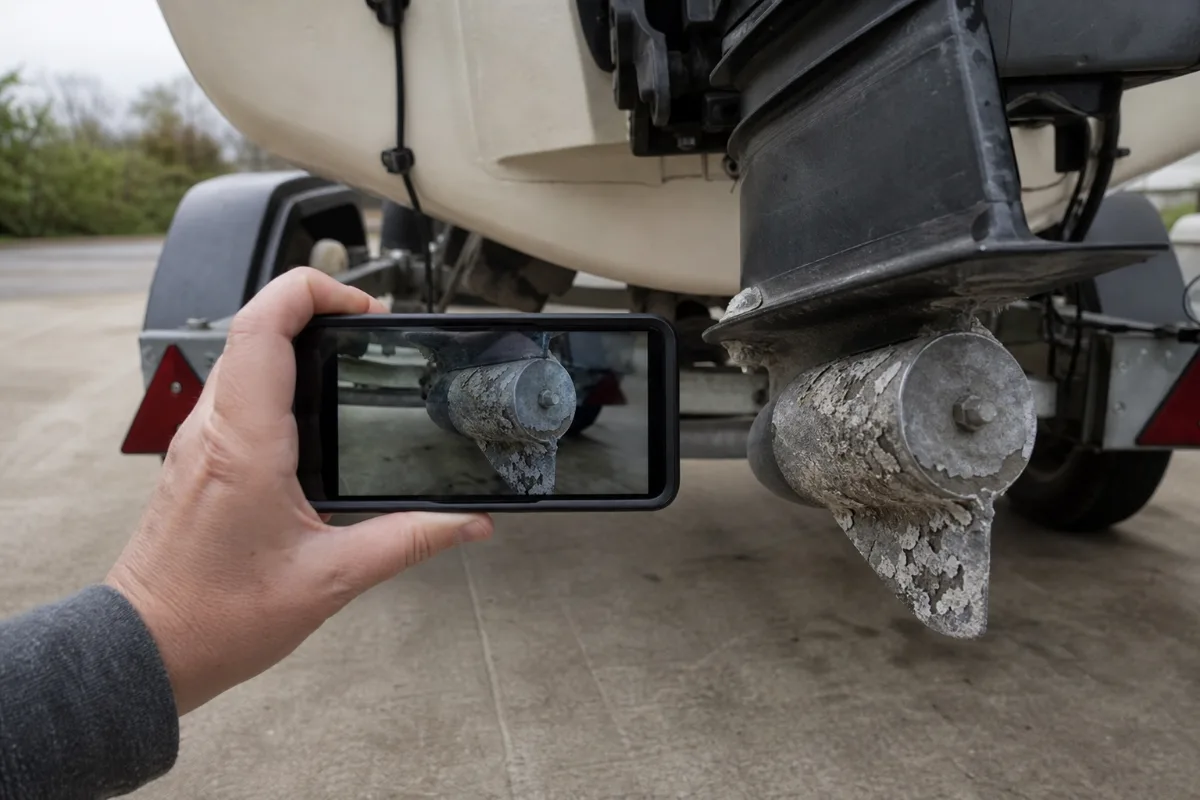
The rule I use is the one most manuals give: replace an anode once it’s about 50% gone. Waiting until it’s a nub means the protection has been fading for a while already.
How fast they go depends on your water, where the boat lives and how much you run it. My lake motor goes about 2 seasons on a set, give or take. A boat that sits in salt water can chew through a set in 6 months.
Check them when you change the gear oil, so it’s one job instead of two, and take a photo on your phone while you’re down there. Next season, comparing that photo beats trying to remember what the thing looked like.
What does half gone look like? A new anode has flat faces and sharp edges. A half-used one is rounded, pitted, and noticeably thinner when you put a finger on either side of it. If you run in salt, look at them mid-season as well, since they get used up a lot faster there than on my lake.
Mistakes that make an anode useless
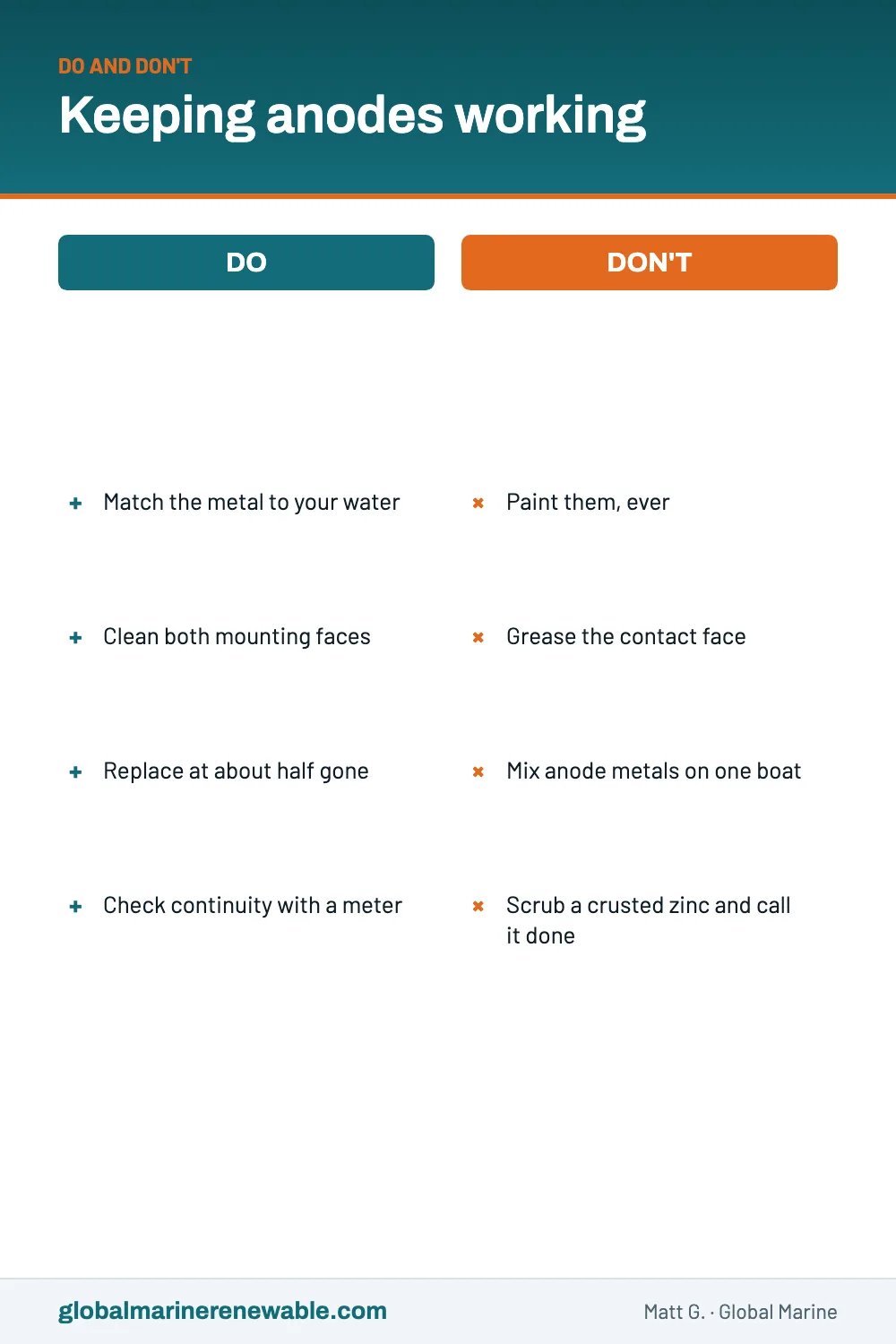
- Painting them. Paint insulates, and an insulated anode does nothing. That includes overspray when somebody paints a hull nearby.
- Dirty mounting faces. Corrosion or old paint under the anode breaks the electrical path to the metal it’s meant to protect. Clean both faces to bright metal before it goes back on.
- Grease on the contact face. Same problem as paint: it insulates. The anode bonds to the motor through that cleaned face, so keep it bare.
- Polishing a crusted one. A zinc anode that has crusted over in fresh water is a strong hint that it’s the wrong metal for where you run. Cleaning it up doesn’t change that. Switching to magnesium or aluminum does.
While the anode is off, look at the bolts. Most are stainless, and stainless into aluminum can seize over the years. Follow your manual on what, if anything, goes on those threads, since makers differ on it. Don’t lean on them when you tighten, because an anode bolt broke first on a motor I was working on, and drilling out a broken stainless bolt in an aluminum housing is my idea of a bad Saturday.
To know whether an anode is still electrically connected to the motor, a cheap multimeter on its continuity setting will tell you in about 30 seconds. Touch one probe to the anode and the other to bare metal on the lower unit, and you want as close to zero resistance as you can get. That’s the half a look can’t give you. It says nothing about how much anode is left, which is what the visual check is for, so use both. A basic meter runs about $20.

- Versatile Digital Multimeter – Accurately measures AC/DC Current, AC/DC Voltage, Capacitance, Frequency, Duty Cycle, Resistance, Diode, Continuity and Temperature.
- Thoughtful Design – Support Data Hold, Large LCD Backlit Screen, Auto Shut-off and Kickstand make the process of measurements easier. Professional level is reflected in some features include Auto-Ranging capability, and True RMS for measuring both AC Current and Voltage.
- Suitable For Many Occasions – This Multimeter is a golden partner to help to troubleshoot a variety of automotive and household electrical problems safely and accurately.
$34.99 In Stock
Paid link · price checked October 16, 2026 15:04
Slips, shore power and stray current
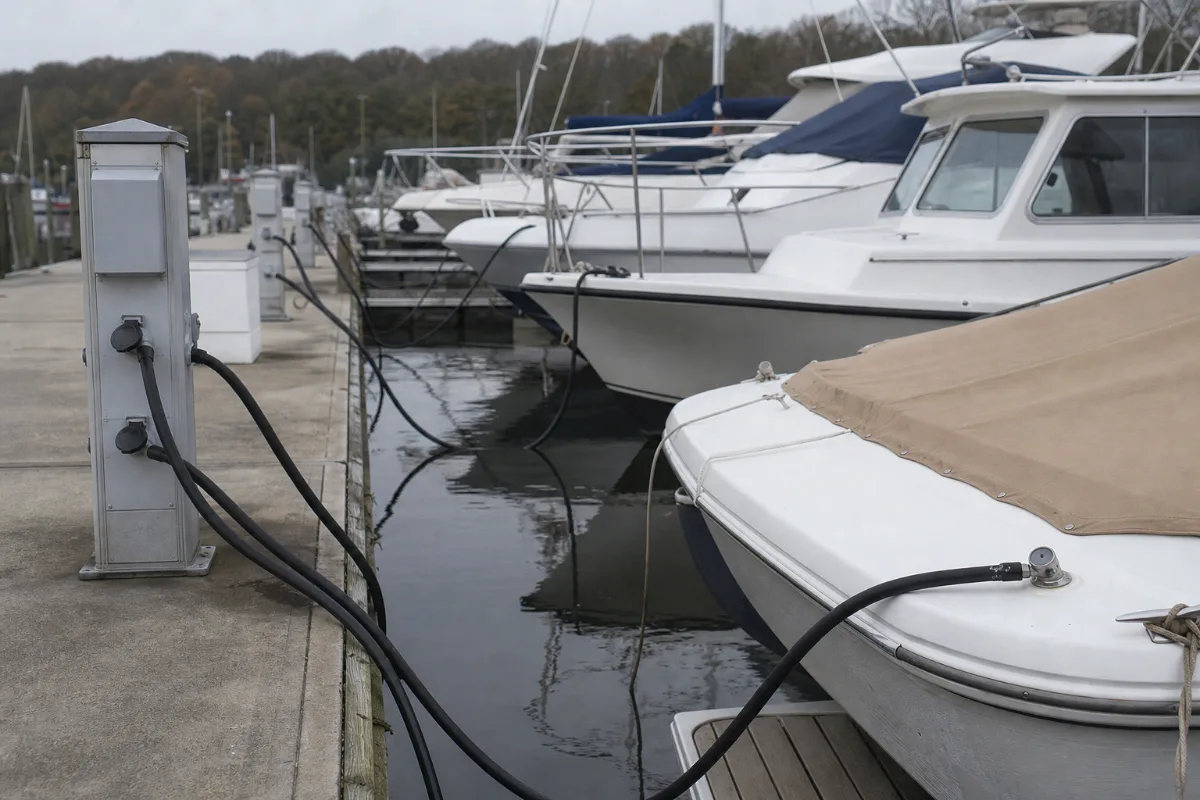
A motor that lives on a trailer has an easy life. One that sits in a slip, especially where there’s shore power on the dock, can lose anodes at a surprising rate, because stray current from a wiring fault can travel through the water and find your motor.
The frustrating part is that the fault isn’t always on your boat. A neighbour’s bad connection can eat your anodes, and no amount of buying replacements fixes the cause.
If you’re in a slip with power and your anodes disappear fast, get a marine electrician to look at it. What they find decides the fix: a wiring fault on a boat gets repaired, while the shore-ground path is what a galvanic isolator or an isolation transformer is for. Either way it’s work for somebody who does marine wiring every day, not a Saturday project.
If the anodes vanish in one season
Here’s my short list when a set of anodes vanishes in a single season:
- Wrong metal for the water, with magnesium in salt being the quickest way to lose one
- Stray current in a slip, as above
- Missing anodes, because a previous owner left one off and nobody noticed
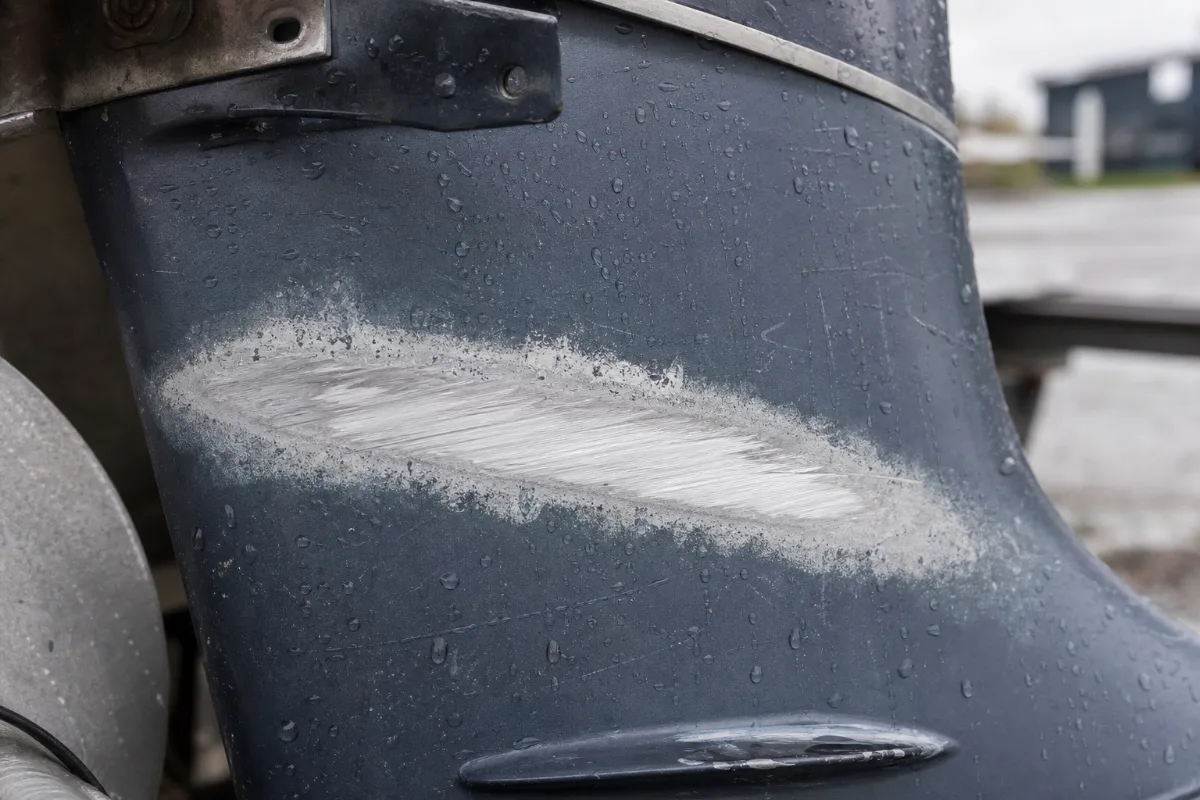
- Bare aluminum somewhere, since a deep scratch through the paint on a lower unit gives corrosion a place to start
The honest summary is that anodes are cheap and lower units are not. I keep a spare trim tab anode in the truck with the rest of the kit, and I’d rather swap one a season early than find pitting on the gearcase when I pull the boat out in the fall.
The one that got me was a motor I bought used. It had a painted anode, which I didn’t think about for a whole summer, and by the time I looked properly there was chalky corrosion starting around the bracket. It didn’t sink anything or leave me stuck out on the water, but it cost me a season of protection I thought I had. Now the anodes get looked at the same weekend as the gear oil, every year, no exceptions.