
Most plastic kayaks don’t get hurt on the water. They get hurt sitting still over the winter, in the wrong spot, resting on the wrong thing.
I’ve paddled lakes and slow rivers for about 20 years, and I’ve stored boats in a one-car garage, along a fence and once, for one bad winter, flat on a gravel pad by the shed. I’m not a marine engineer. What follows is what kayak makers write in their own owner’s manuals, plus what I do with my two plastic sit-on-tops, a 10-footer and a 12-footer, plus an old inflatable, and I’ll keep the two apart.
The short version goes like this. Clean the boat. Dry it inside and out. Store it indoors if you can, on its side or hanging in wide slings, out of the sun. Don’t hang it by the grab handles, and don’t set it flat on its hull on two sawhorses. If it has to live outside, get it off the ground and put a tarp above it, not on it. Inflatables and folding boats get their own rules, and the biggest one is about mice.
Clean It and Dry It Before It Goes Anywhere
KL Industries’ owner’s manual for its polyethylene kayaks says to wash the boat with mild soap and water, and to rinse the boat and its hardware well after paddling in salt, brackish or polluted water. That’s the whole cleaning job for a plastic boat. I use a bucket, a soft brush and the garden hose on the driveway, the same day the boat comes off the ramp for the last time.
Drying matters more than the washing. Pull the drain plug, pop every hatch and stand the boat on end for 24 hours or so, so the water runs out. Then sponge out whatever’s left in the corners. The same KL manual warns not to let water collect between the deck and the hull and freeze, because freezing damages the flotation foam. The foam is part of what keeps a swamped boat floating, so this one matters.
While the boat’s clean, give it a once-over. KL tells owners to check hatch covers and cables for wear, along with buckles and straps, to look over the hull and deck once a year, and to repair deep scratches. Light nicks and scrapes are just part of paddling. I’d rather find a frayed rudder cable in November than at the ramp in May with the boat loaded on the truck.
How to Hold the Hull: On Its Side, in Slings or on End
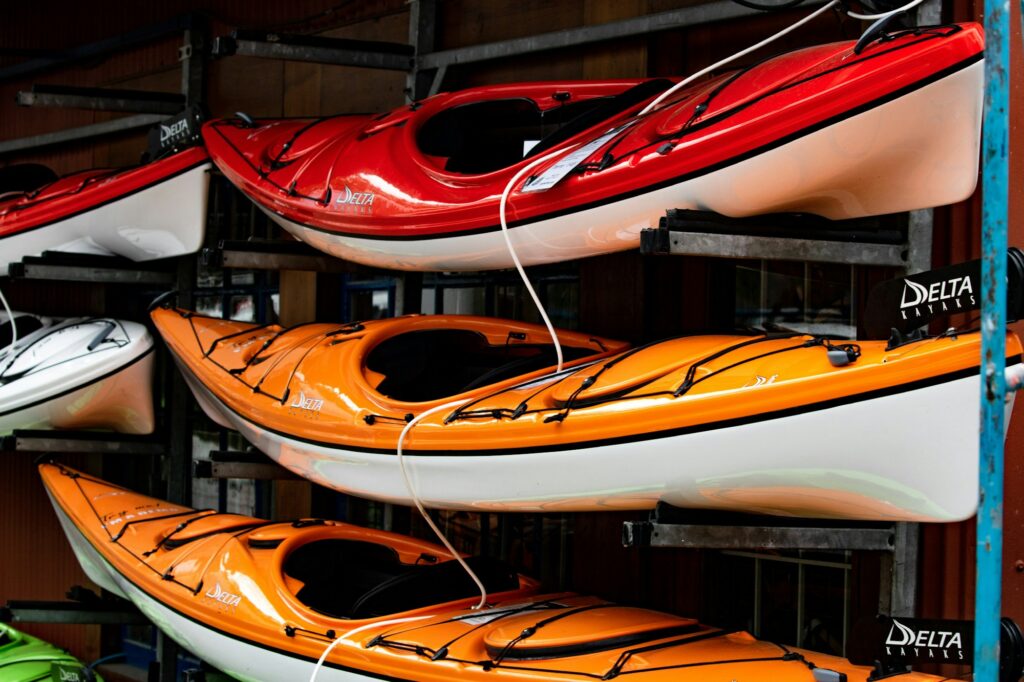
This is the part people get wrong, and it’s the part that costs money. A polyethylene hull is tough, but it moves. Put steady pressure on one spot for months and the plastic slowly takes that shape.
The manuals agree on the basics, even if they rank things a little differently.
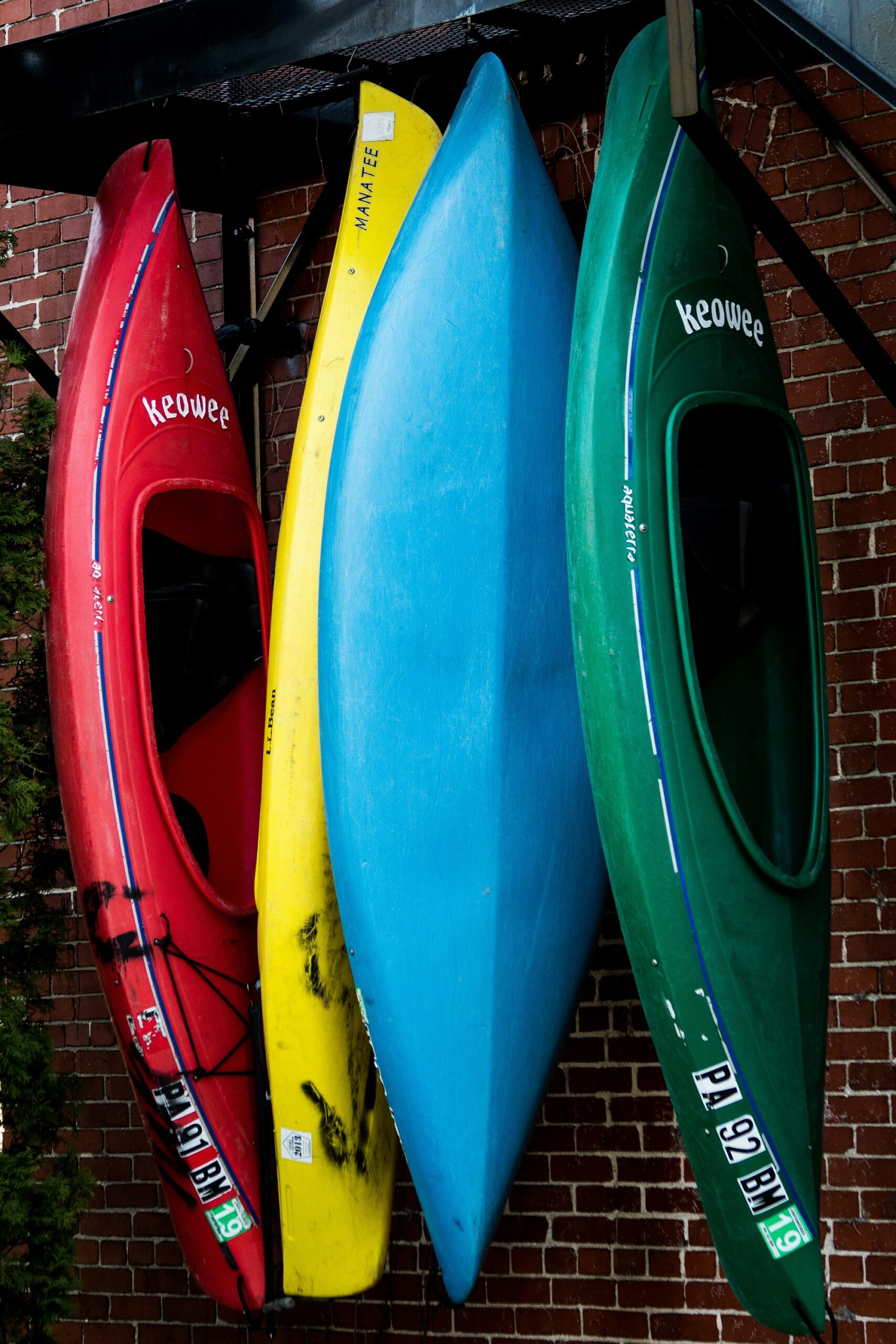
- KL Industries says to store the kayak on its side and not on its hull. It also says not to set the boat on 4x4s or sawhorses, because dents will form in the hull.
- Wave Armor’s manual says it’s always best to store the kayak indoors, out of direct sunlight. It would rather you stand the boat on end or hang it with slings that hold up the hull.
- That same Wave Armor manual says hanging the kayak by its molded-in handles makes warping more likely. Floor storage, upside down, is its last resort.
So on its side, on padded supports, or in wide slings, with the weight spread out. A narrow bar or a 2×4 edge is the same problem as a sawhorse. When I hang a boat, I put the straps about where the bulkheads or the seat sit, since that’s where the hull is stiffest, and on my 12-footer they sit about 4 feet apart. Honestly, that’s just my habit, not something the manuals spell out.
Garage Options: Wall Rack, Ceiling Slings or a Corner
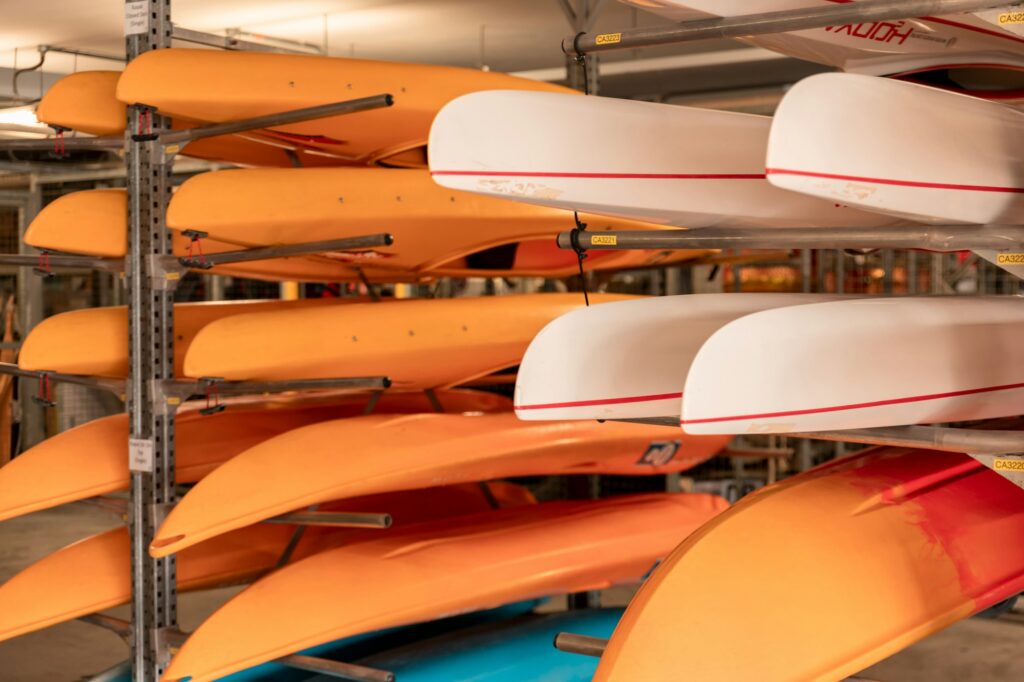
Indoors wins every time, and a garage is where most of our boats spend the winter. You’ve got three ways to do it.
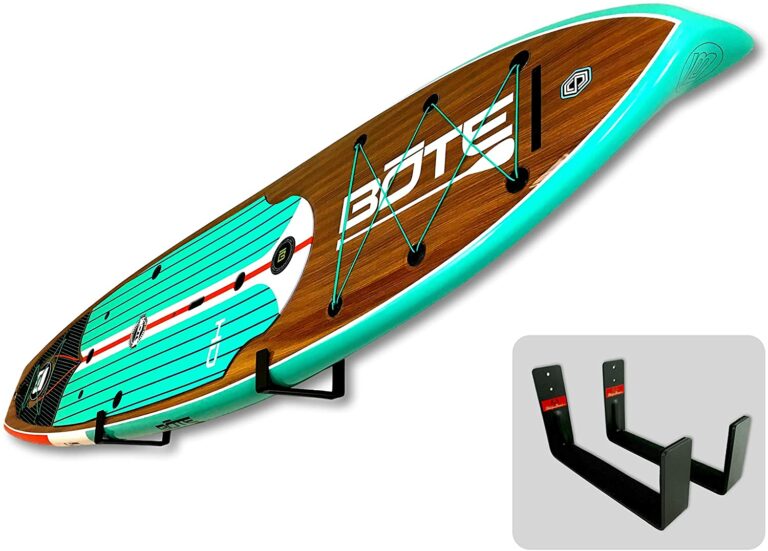
A wall rack is what I use. Two padded arms bolted into the studs about 4 feet apart, the boat on its side with the deck facing out, the cockpit facing the wall. It keeps the boat off the floor and out of the way of the car. If you’d rather build one than buy one, our guide to building a kayak rack out of wood walks through it step by step.
Ceiling slings or a hoist work well if you’ve got the height. The trick is the slings themselves. They need to be wide, flat straps around the hull, never a rope through the grab handles. Wave Armor’s warning about handles is the reason.
Standing it on end in a corner is the easy answer for a short rec kayak. Wave Armor actually lists that first. I’d pad the floor under the end and tie the boat off loosely to the wall so a bumped bike doesn’t knock it over.
Whichever you pick, keep the boat away from the furnace, the water heater and a sunny window. Oru’s owner’s manual for its folding kayaks says to store them away from direct sunlight and heat sources, and that long sun exposure can make plastics discolor or turn brittle. The same goes for a sun-baked wall in a hot garage.
Storing a Kayak Outside for the Winter
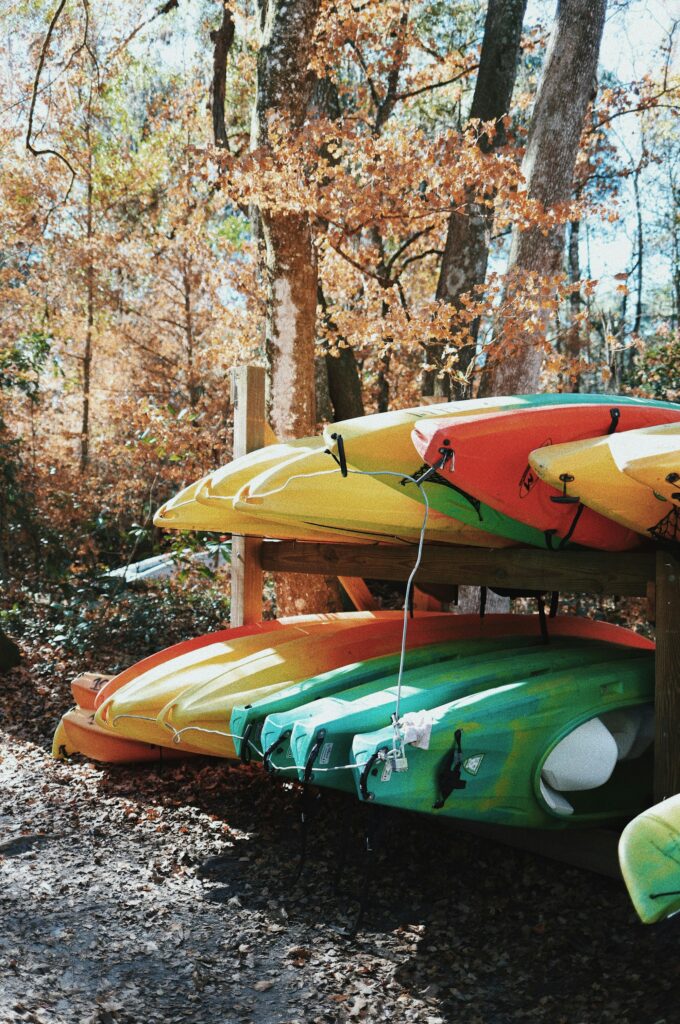
Sometimes there’s no room inside. I’ve been there. The rules don’t change much, you just have to build what the garage gave you for free.
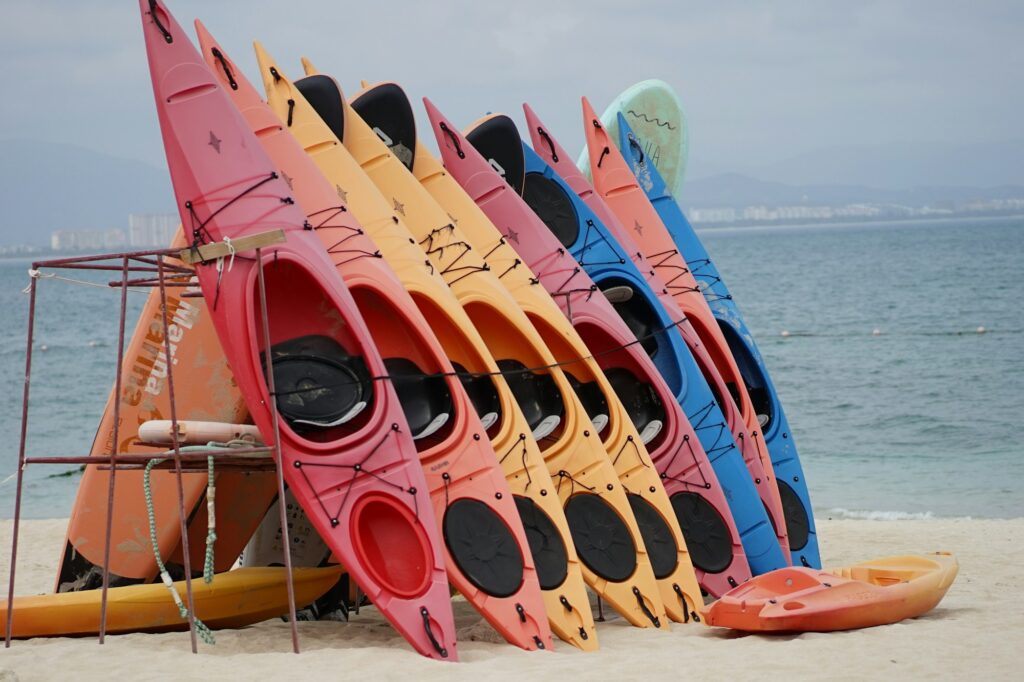
Get the boat off the ground. Snow, standing water and wet leaves sit against a hull on the ground for months. A rack with padded arms, under an eave if you have one, beats any spot on the dirt. Put it on its side or upside down, with the cockpit facing down or covered so it doesn’t fill with rain and snow.
Then shade it. KL’s manual says to keep the sun off with a tarp hung above the boat (I leave a foot or so of gap), not lying on it, and to leave enough air space for the air to move so heat doesn’t build up. Wave Armor’s manual suggests a plastic protectant to guard against UV. A cockpit cover keeps the leaves, the water and the critters out of the inside, and our roundup of kayak cockpit covers covers the ones worth buying.
Last, lock it. A cable lock through a scupper hole or a factory lock point, around a post or the rack, won’t stop a determined thief, but it’ll stop the casual one. If you’ve got a Hobie or another pedal boat, our post on storing a Hobie kayak outside goes into the drive and the rudder too.
The gravel-pad winter I mentioned is how I learned all of this. No rack, a tarp tied right down onto the deck, the boat flat on its hull. Come April it had a soft spot under the seat about the size of my hand, and the tarp had held a puddle on top all winter. The flat spot came out, but it cost me a season’s worth of worrying about it.
Inflatable and Folding Kayaks
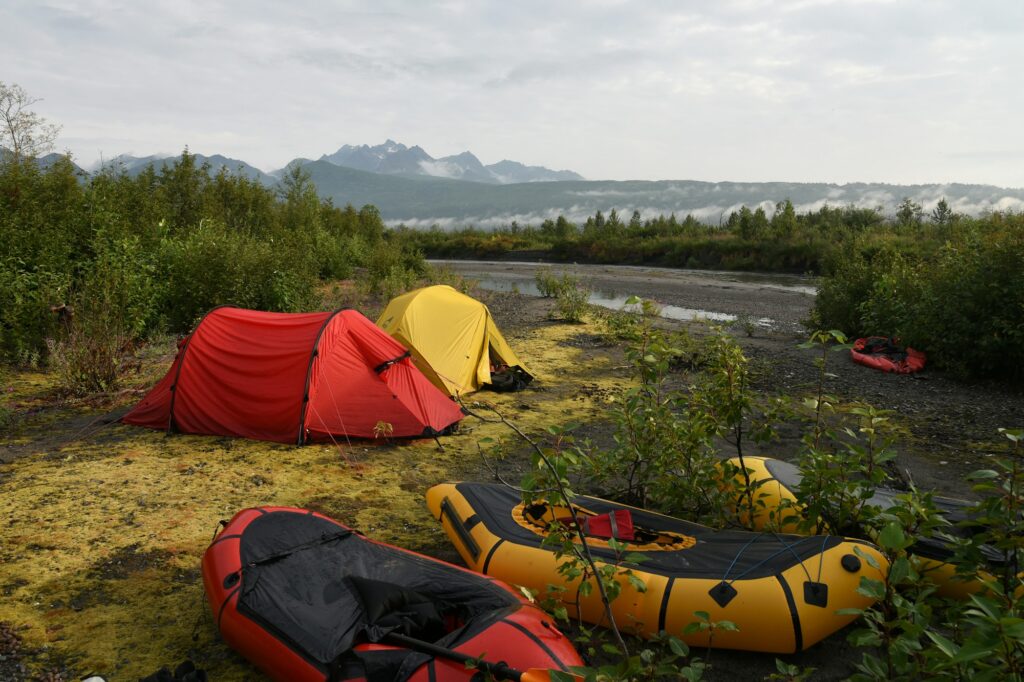
These boats play by different rules. You can’t hang an inflatable on a wall rack, but you can wreck one in a closet.
NRS, which sells inflatable rafts and kayaks, says to clean the boat before storing it and then put on a coat of 303 Aerospace Protectant, following the maker’s directions. For storage it suggests leaving the boat softly inflated and out of the sun. If you don’t have the room, loosely roll or fold it and keep it out of the sunlight.
Turns out the mice warning is the big one. NRS says some rodents love to burrow into a stored inflatable, and that just about every year it hears from customers with horror stories of massive damage. My old inflatable lives in a sealed plastic tote on a shelf now, rolled loose, with nothing chewable around it. Mice in the garage don’t care how much the boat cost.
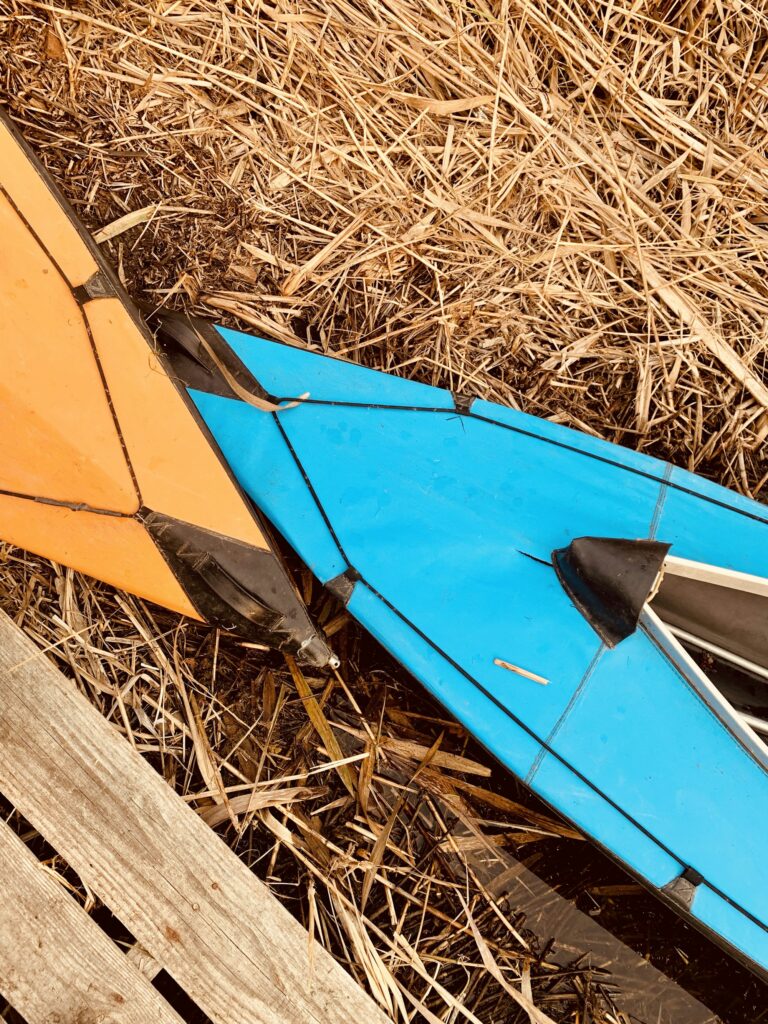
Folding kayaks need care too. Oru’s manual says to store its boats in their box form, indoors. It also says not to use or fold an Oru below freezing, 32°F, because the plastic hull can get brittle and crack. So if your folding boat is still set up when the cold comes, fold it on a mild day and bring it inside.
Dents in the Spring and How Makers Fix Them
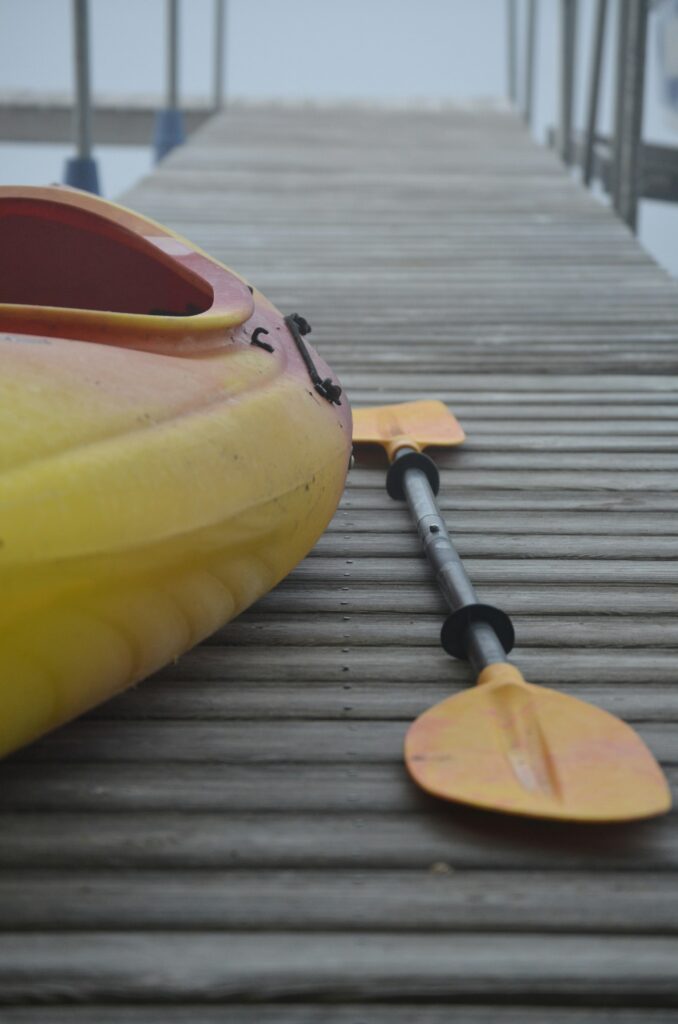
Say you pull the boat out in April and there’s a dent or a flat spot in the hull. Don’t panic. Polyethylene has some memory, as KL’s manual puts it. It tends to go back to its molded shape.
KL’s fix comes in two steps. Take away whatever pressure caused the dent, either by supporting the boat a different way or by pulling the gear out. Then set the boat in warm sun, and KL says the south side of a building is usually the warmest spot. As the plastic warms up, the hull usually, but not always, goes back to its shape. KL says it can take from one day to two weeks, depending on how warm it is and how bad the dent is.
Wave Armor’s version adds a little heat. Brief sun is often enough, it says. If that doesn’t do it, a hair dryer or another low heat source such as a 75-watt light bulb can warm the outside of the hull until you can push it back by hand. It warns not to overheat the plastic. You can set a weight inside against the dent to hold the shape while it cools, and Wave Armor says to allow up to 24 hours for that.
A dent you fix in April is a dent that won’t mess with your tracking in June. I’d still rather never need any of this, which is the whole point of the rack.
My Fall Checklist
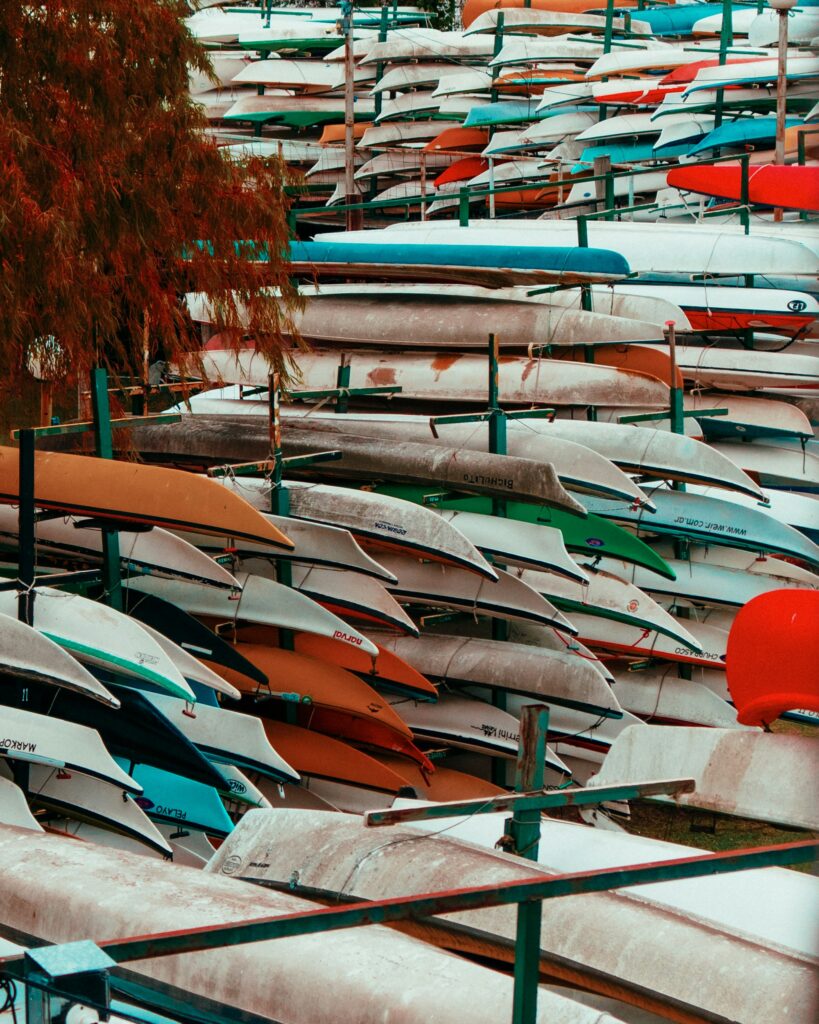
Here’s the order I go in, every year, usually the weekend after the last paddle.
- Wash it with mild soap and water, rinse the hardware, and pull the drain plug.
- Open every hatch and stand it on end to drain and dry for a day.
- Check the hatch covers and straps, the buckles and any rudder cable while it’s clean.
- Pick the spot: inside on its side, in wide slings or on end, away from heat and windows.
- If it’s outside, rack it off the ground, cover the cockpit and hang a tarp above it.
- Inflatables get cleaned, dried, rolled loose and stored where mice can’t get in.
That’s about an hour of work, maybe 90 minutes if the inflatable comes out too. Compared to a new boat, it’s the cheapest hour of the paddling year.
Sources checked October 29, 2026: the owner’s manuals of KL Industries (polyethylene kayaks), Wave Armor (Impulse and Cruizer) and Oru Kayak (Bay ST and Coast XT), and NRS, “How to Clean and Store Your Inflatable Boat.” The strap placement and the order of the checklist are my own habits, not the manuals’. Your own boat’s manual beats all of this, so read it first.