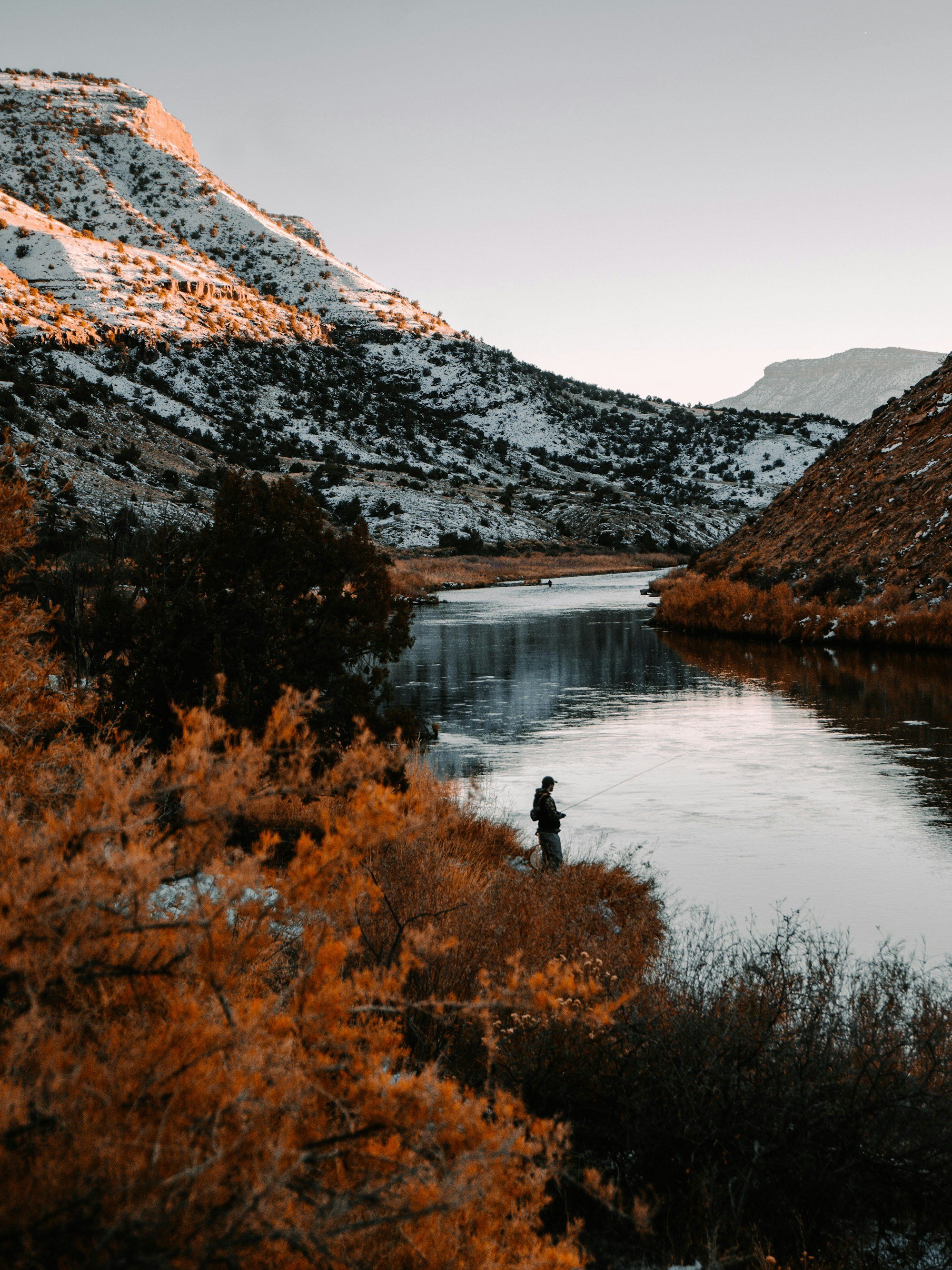

Rainbow trout don’t quit when the leaves turn. They move.
In fall they come back toward shore as the water cools, and in winter they’re often right under the ice. If you fish small lakes like I do, fall is the time to cast small spinners, spoons and flies along the shoreline, or to set an inflated nightcrawler on the bottom. In winter you jig small baits just under the ice and work down until something hits.
I’ve run small boats and kayaks on lakes and slow rivers for the better part of twenty years, and the best fall trout days I’ve had came with an empty ramp and nobody else on the water. The state fish agencies agree on most of what works in the cold months, and all of it fits a small boat just fine.
Why Fall Is the Quiet Good Season for Rainbows

The Minnesota DNR’s trout lake tips put it plainly: few anglers chase rainbows in September and October, but good fishing is possible. By then, the boats that crowded the ramp in June are winterized and parked in driveways, and the fish have the lake mostly to themselves.
Many states also put fresh fish in the water for fall. Maryland’s DNR announced on September 30, 2026 that its fall stocking starts the first full week of October, with more than 15,000 brown, golden rainbow and rainbow trout going into 26 waterbodies. Those fish average just under a pound. Check your own state’s stocking page before you go, because a freshly stocked pond in October can be the easiest trout fishing of the year.
Stocked rainbows in Minnesota’s trout lakes average 10 to 14 inches, the DNR says, with bigger fish in lightly fished water. Maine’s wildlife agency says anglers there usually catch 8 to 16 inch fish, with the odd one up to 7 or 8 pounds. So pack light gear and a net that can still handle a surprise.
Water Temperature Tells You Where They Are

According to the Maine Department of Inland Fisheries and Wildlife, rainbows prefer cool water between 55 and 68°F. They handle a wider range than brook trout, but that band is where they’re comfortable and feeding.
In summer, the shallows warm past that range, so the fish slide deeper. In fall, the surface cools back into it, and the trout follow their food toward shore. Maine says that in spring and fall, rainbows can be caught close to shore. They feed on whatever’s handy, mostly aquatic insects, and once they reach about 12 inches, small fish become a bigger part of the menu.
A cheap thermometer on a string earns its spot in my boat bag. I drop it a few feet down at the first spot I fish. If the surface is still in the low 70s in early fall, I fish deeper and slower. Once it’s in the 50s and 60s, I move in close and cast to the bank.
Fall Baits and Lures That Get Bit

Maine lists dry flies, streamers and bright lures like spinners or spoons for fall fish near shore. Minnesota adds two ways to go about it. You can bottom-fish an inflated nightcrawler, or you can cast or troll small lures or flies along the shoreline.
The inflated nightcrawler sounds strange if you’ve never done it. You put a little air into the worm so it floats, then cast it out with a slip sinker for weight, the way Minnesota describes it. The DNR calls rainbows a great starter fish for beginners, and its best-bet tip for a first one is an inflated nightcrawler fished from shore. It’s a good rig for a kid’s first trout.
From a small boat, trolling is the easy way to cover a shoreline. I run a small spoon or spinner on light line, at a slow paddle or the lowest speed my trolling motor has, along the edge where the bottom drops off.
Tracking matters here. A boat with good tracking makes this much easier. A kayak that wanders lets the lure swing in and out of the zone, and every swing is a few yards of shoreline you didn’t really fish.
If you’re not sure which lure is which, here’s my rundown of fishing lure types and which fish each one is for.
The Best Times of Day as It Gets Colder

Early fall still fishes a lot like summer. FishUSA’s trout timing guide calls early morning and late evening prime times in fall, with midday getting better as the nights get colder. By winter it flips. Trout are least active in the coldest water of the morning and most active from late morning through early afternoon, especially on sunny days.
That’s good news if you hate frosty launches as much as I do. On a November lake I don’t need to be at the ramp in the dark. I launch mid-morning, fish through lunch and I’m loaded back on the trailer before the light goes flat. The same guide says to fish slowly and deep in winter, in the slower water where trout save their energy.
Watch the weather too. A calm, bright afternoon is my favorite window on a cold lake. When the wind picked up on my last trip, the drift got too fast to keep a lure near the bottom, and the boat got hard to hold, so I went home with a story instead of fish. It happens.
Winter Through the Ice: Depths and Baits

The two agencies don’t quite agree here. Minnesota says winter rainbows often swim just below the ice. Its advice is light line, small jigs tipped with waxworms or preserved minnows, and to start just under the ice and go deeper until you get strikes. Maine says its ice anglers usually do best in fairly shallow water, under 15 feet, with the bait close to or on the bottom.
Those aren’t really at odds, though. In shallow water, under the ice and near the bottom aren’t far apart. The safe plan is Minnesota’s: start high, then work down a few feet at a time until a fish tells you the depth.
Maine also says jigging usually beats tip-up traps for rainbows. If you’re fishing traps and getting a lot of hit-and-run bites, it suggests going to smaller minnows, or switching to worms or salmon eggs. I fish ice only a few days a year, and jigging is what’s worked for me too, mostly because it lets me move until I find fish instead of waiting on a flag.
No ice is safe just because someone else is on it. Check your state’s ice guidance and the local reports before you walk out, and carry picks and a rope.
Cold Water Is the Real Danger From a Small Boat

This is the part I care about most. Fall trout water is cold water, and a fall into it from a kayak or a jon boat is a different thing than a summer swim.
The National Center for Cold Water Safety says to treat any water under 70°F with caution and to wear thermal protection below that. Water from 50 to 60°F is its range for the strongest cold shock, which can take away your breathing control and your ability to swim. At 45°F, water is painfully cold. And water pulls heat from your body about 25 times faster than air does.
Twenty-five times.
Look at those numbers next to the trout ones. The 55 to 68°F that rainbows like sits right on top of the worst cold-shock range. The water that makes the fishing good is the water that’s hardest to survive.
So I wear my life jacket zipped up. Always.
Not stuffed under the seat, not clipped to the cooler. I dress for the water, not the air, with a dry bag holding a full change of clothes in the hatch. I don’t stand up to cast from a kayak in the cold months. And I keep the boat lightly loaded, because a boat with too much gear sits low and gets tippy when you lean out to land a fish. I’ve written more about dressing for the water in my fall bass fishing from a kayak guide, and it holds for trout too.
Landing and Releasing Trout in the Cold

If you’re keeping your limit of stocked fish, go ahead and follow your state’s rules. If you’re letting them go, the Minnesota DNR’s catch-and-release tips are short and worth following.
Play the fish and land it quickly, because tired, stressed fish don’t survive well. Handle it gently and keep it in the water as much as you can. Unhooking it without lifting it out is best. Use needle-nose pliers or forceps to take the hook out, and barbless hooks make the whole job easier. If a trout is hooked deep, cut the line and let it go.
From a small boat, that means having the net and the pliers where your hand can find them without looking. I keep both clipped inside the cockpit, never loose on the deck. In cold weather there’s another reason to keep the fish in the water: your hands stay drier, and wet hands go numb fast in November.
My Cold-Month Trout Plan, Start to Finish
In early fall, check the stocking reports and the water temperature. Once it’s in the 50s and 60s, fish close to shore with small spinners, spoons, flies or an inflated nightcrawler on the bottom. As it gets colder, shift your trips toward midday and slow everything down. Once there’s safe ice, jig small baits just under it and work down until you find the fish. And every single time, wear the life jacket and dress for the water.
The cold that makes the trout bite is the same cold that makes a swim dangerous.
If you fish for bass too, my notes on winter bass fishing cover where they hold when it’s cold.