As an Amazon Associate I earn from qualifying purchases. This post contains affiliate links. If you buy through them we may earn a commission at no extra cost to you.
Product prices and availability are accurate as of the date and time indicated and are subject to change. Any price and availability information displayed on Amazon at the time of purchase will apply to the purchase of this product. Certain content that appears on this site comes from Amazon. This content is provided "as is" and is subject to change or removal at any time.
If your outboard’s tell-tale stream goes weak or stops, shut the motor off and look before you do anything else. Then start with the free stuff. A clogged outlet or a wad of weed on the water intake costs nothing to fix, and I have had both. Sometimes it really is the impeller. Once in a while it’s a job for a shop.
Before you mix a can, check it on the free 2-stroke fuel mix calculator — it also says which oil an outboard actually needs.
Everybody at the ramp calls it peeing, so that’s what I’m calling it too. This is the order I check things in on my own motor, from free and quick to expensive and slow. Watching that stream is one of the every-trip checks in the maintenance schedule I keep.
What that little stream is actually telling you
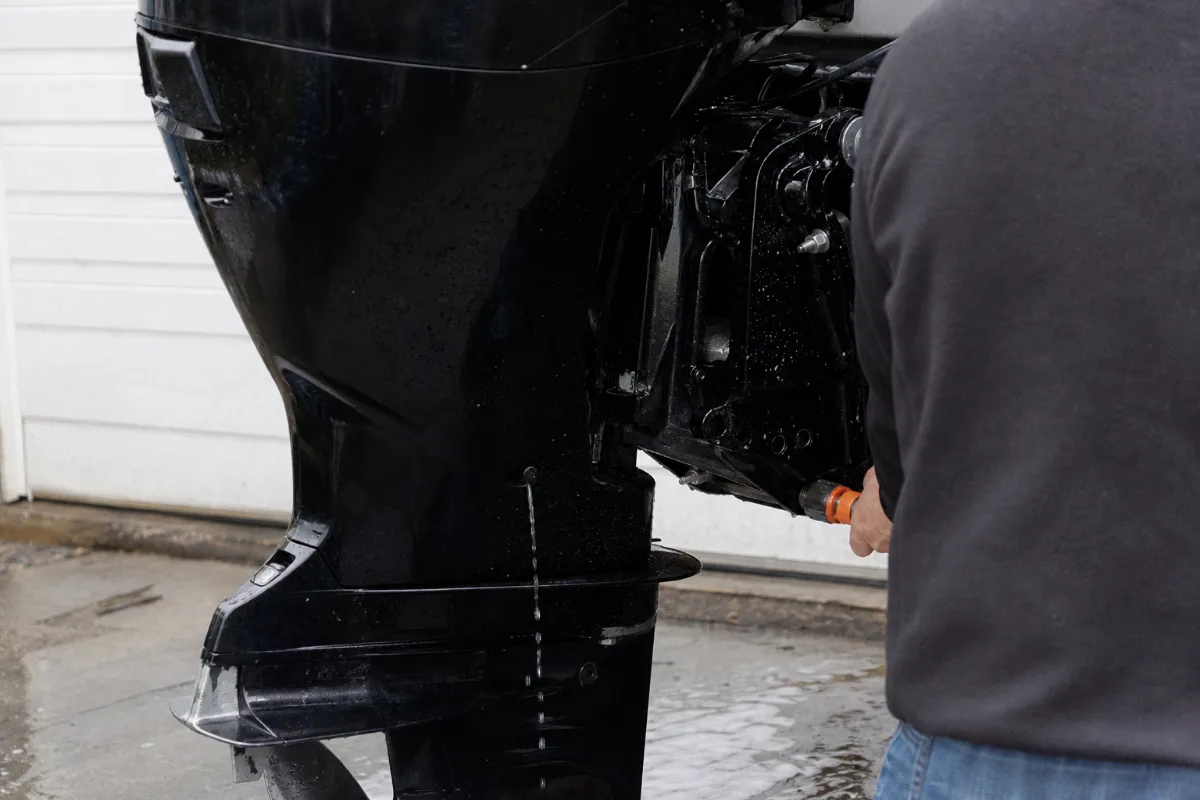
The tell-tale is a small stream of water that comes out of a little hole on the side or back of the motor. The water pump in the lower unit pushes lake or sea water up through the engine to cool it, and the tell-tale lets a bit of that water out where you can see it.
So a strong, steady stream is a good sign the pump is moving water. It isn’t proof the whole cooling system is healthy, though, because a motor can push a decent stream and still run hot. A weak one means something between the intake down on the lower unit and that little hole up top isn’t right, and that could be the hole itself, the intake screens, the pump, or the passages in between. Narrowing it down is the whole job.
On my motor, the stream shows up within about 2 seconds of starting. Yours might take a little longer, and a normal stream looks different from one motor to the next. The useful habit is knowing what yours looks like on a good day, so you notice when it changes. I glance at mine every time I leave the ramp. Every single time.
Shut it off first, then think
If the tell-tale stream stops or turns into a dribble, shut the motor off. Don’t keep it running while you figure out why.
An outboard that isn’t getting cooling water can overheat quickly, and overheating is how pistons get scored and cylinder heads get warped. Some motors have an overheat alarm or a warning light. Plenty of small motors don’t, and on those the tell-tale may be the only warning you get.
If you’re out on the water when it happens, shut it down first and then make a plan. Clear any weed off the intake if you can reach it over the transom. If the stream doesn’t come back, paddle or call for a tow instead of running the motor home. I once paddled a 14-foot aluminum boat about a mile back to the ramp for exactly this reason. It cost me an afternoon, and honestly that’s a great trade for a motor.

Check the muffs, or the water depth
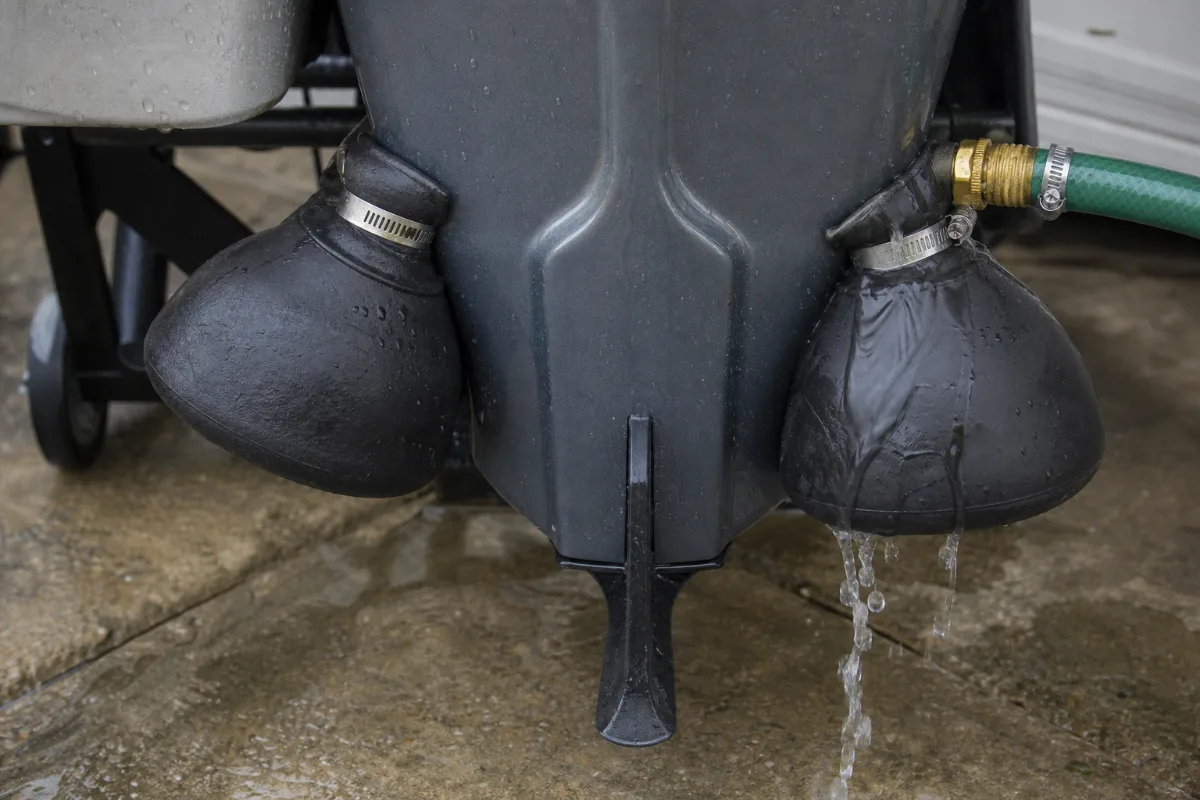
If the stream goes weak on flush muffs in the driveway, check the muffs before anything else. The rubber cups have to sit right over the water intakes, which on a lot of motors means one on each side of the lower unit. If a cup sits half off, the pump pulls in air along with the water and the stream goes weak. Kinda obvious once you see it, and easy to miss when you’re in a hurry.
Turn the hose on all the way, too. A half-open spigot can starve the pump when the motor is on muffs, which I have done at least twice, both times while telling myself I had already checked it.
Keep the motor at idle and in neutral while it’s on muffs. Revving an outboard on muffs can pull more water than a garden hose supplies. If you’re new to running a motor on flush muffs, I covered that in its own post.
In the water, the question is depth. If the boat is sitting in very shallow water, or the motor is tilted up too far, the water intakes can end up near the surface or down in the mud. Lower the motor so the intakes sit fully underwater, then try again.

Clear the tell-tale outlet
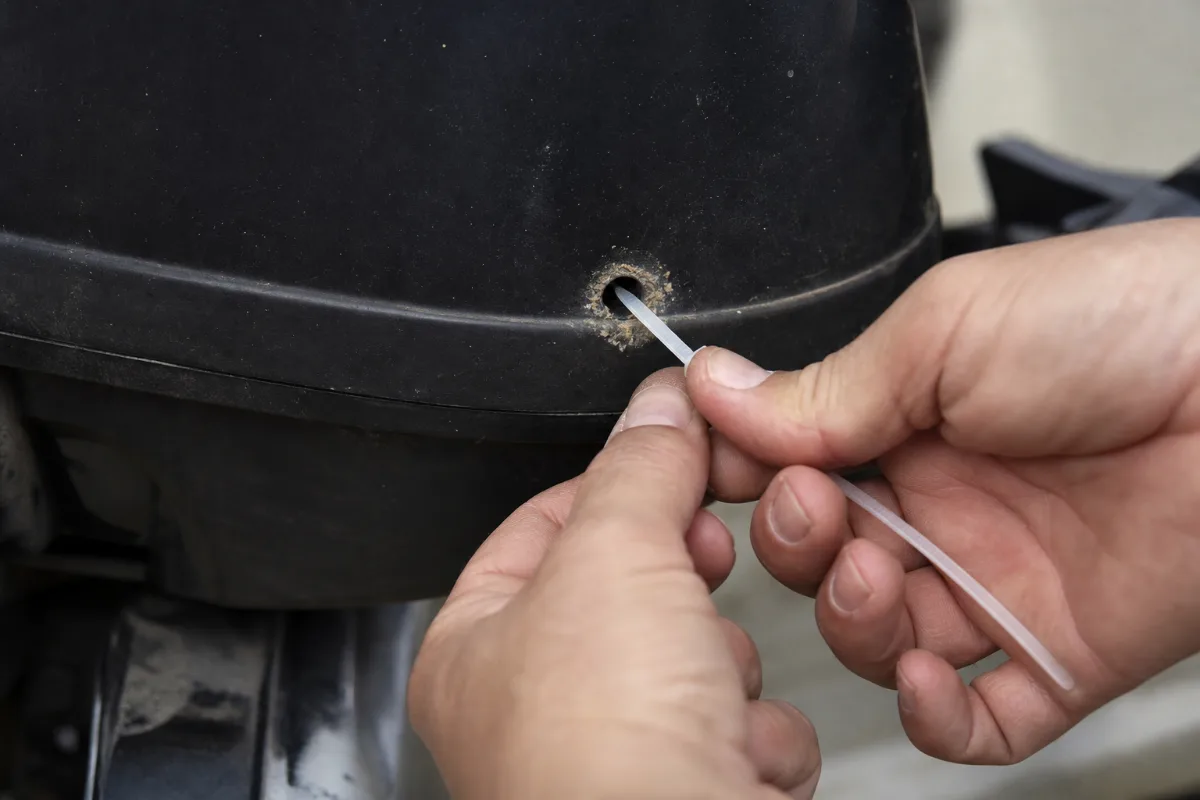
A clogged tell-tale outlet is one of the cheapest problems on this list, and it’s where I look next. The outlet hole is small, and sand, salt crust, mud and even insect nests can block it while the motor sits.
With the motor off, push a piece of stiff wire or a 6-inch zip tie up into the outlet and work it back and forth 3 or 4 times. Then start the motor and look. If a strong stream comes back, the outlet was at least part of the problem. Watch it again on your next run to be sure it stays strong, then go fishing.
On many motors you can also check this from the other end. Inside the cowling, a small hose runs to the back of the tell-tale outlet. With the motor off, pull that hose off its fitting and point it somewhere safe. Then, with the muffs on and the water already running (or the motor in the water), start it for a few seconds while keeping your hands well clear of the flywheel. Never run an outboard without a water supply, not even briefly. If water spurts out of the hose, the pump is working and the blockage is in the outlet. If nothing comes out of the hose, the problem is further back.
Weeds on the intake screens
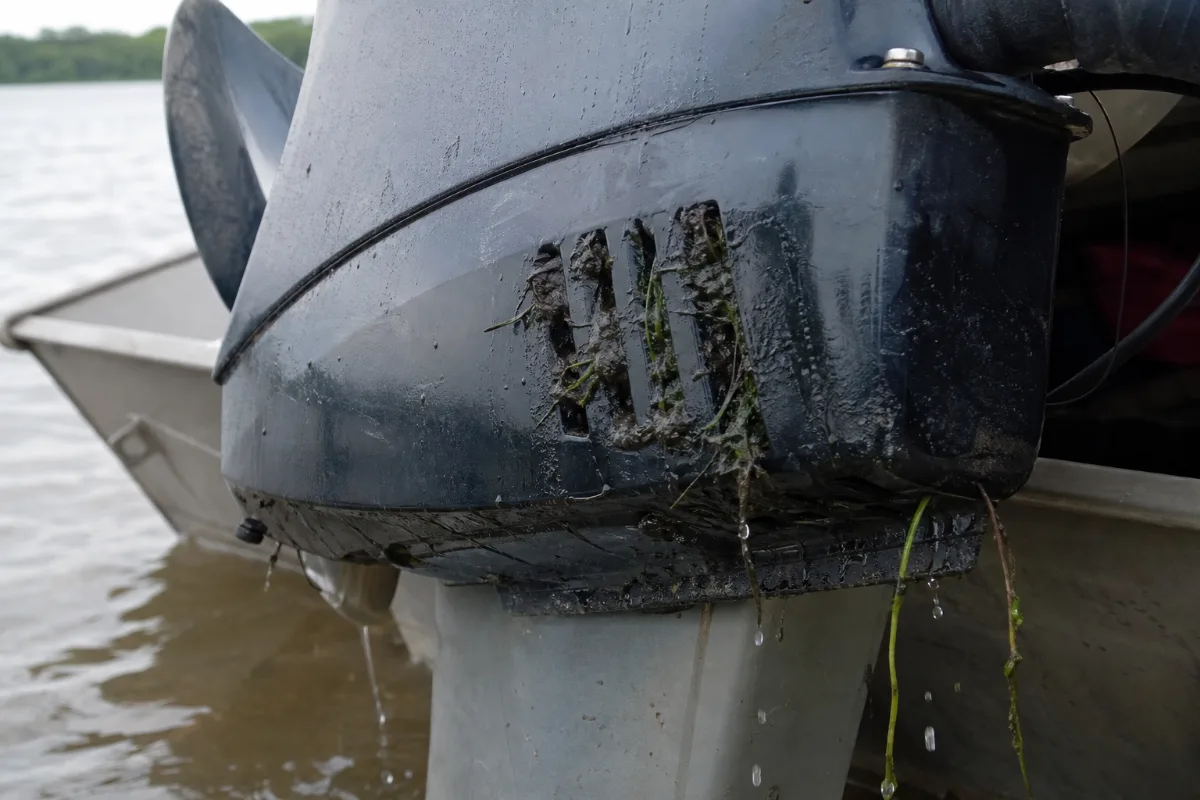
The water intakes on the lower unit are covered by small grates or slots. Weeds, plastic bags, sand and mud can plug them, especially after running in shallow or weedy water.
Tilt the motor up and look at the intake grates. Pull off anything you can see. Go gently with whatever you poke into the slots, because the last thing you want is to shove debris further in toward the pump. A plastic grocery bag can wrap a whole side of a lower unit and look like part of the motor until you touch it. So actually touch it.
After a run through a weed bed, I check the intakes at the ramp before I leave, instead of waiting until the stream is already weak. It takes about 30 seconds, and it has saved me from starting this whole list more than once.
When it’s the impeller after all
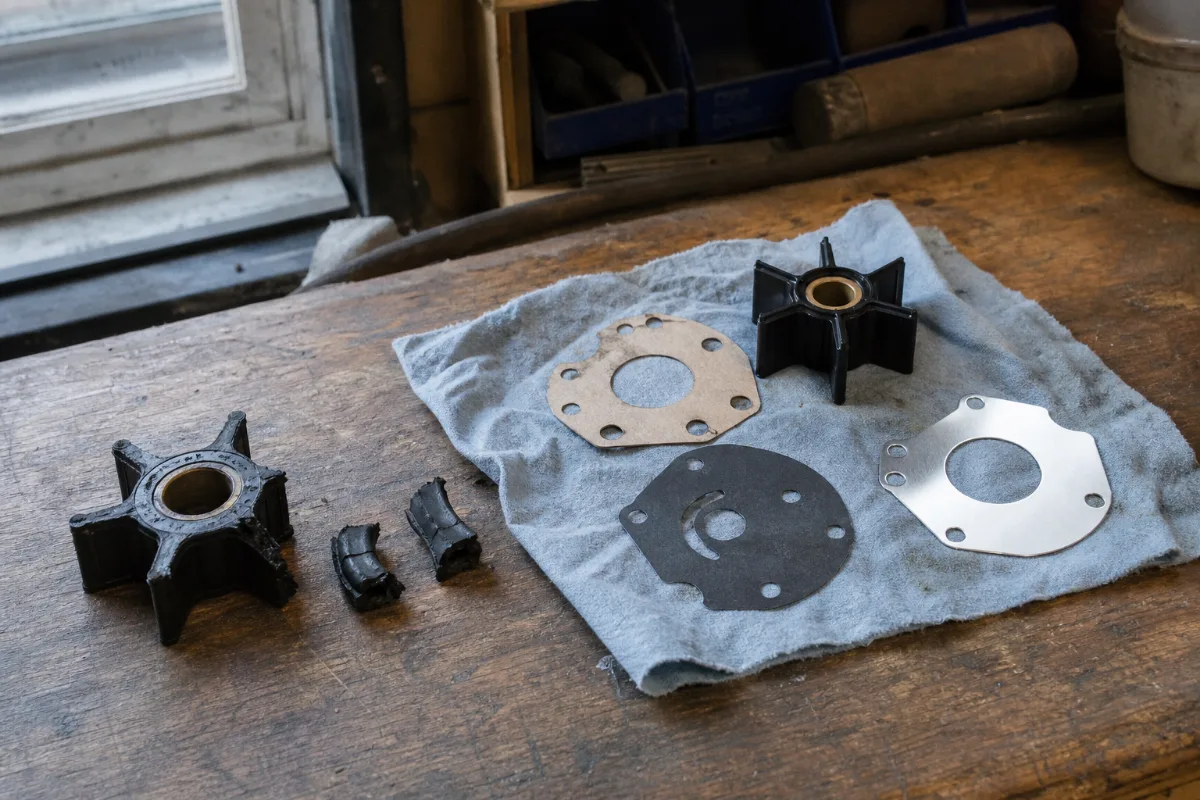
If the outlet is clear and the intake screens are clean and the stream is still weak, the water pump impeller is the next suspect. The impeller is a rubber wheel with flexible vanes, down inside the pump housing in the lower unit, and those vanes wear out and take a set with age. An impeller that sat bent all winter can take a set and pump less than it should, which is one more reason how you store the motor matters.
On most motors, replacing the impeller means dropping the lower unit, though the exact procedure varies by model. I walk through the whole job in my post on replacing the impeller, but two things are worth knowing now.
- Buy the full water pump kit for your exact model, not just the rubber wheel. A worn pump housing or wear plate can keep even a new impeller from pumping well, and the kit comes with fresh gaskets.
- If the old impeller is missing chunks of rubber, find them. Broken vane pieces can travel into the cooling passages and block water flow, even after a new impeller goes in.
Now say the stream looks fine but you think the motor is running hotter than it used to. A cheap infrared thermometer at least gives you something to compare. Point it at the same spot on the powerhead, say the thermostat housing, and note what it reads on a day the motor is running fine. Takes 5 seconds. Surface temperature moves around with the weather and with how hard you have been running, so treat a reading well above your usual as a reason to look further, not as a diagnosis.

- 𝐕𝐞𝐫𝐬𝐚𝐭𝐢𝐥𝐞 𝐓𝐨𝐨𝐥𝐬: Infrared technology allows you to measure various objects at home and outdoors; Use it for 𝒎𝒆𝒂𝒕, 𝑫𝑰𝒀 𝒄𝒂𝒏𝒅𝒚, 𝒐𝒗𝒆𝒏𝒔, 𝒈𝒓𝒊𝒍𝒍𝒊𝒏𝒈, 𝒇𝒐𝒐𝒅, 𝒄𝒐𝒐𝒌𝒊𝒏𝒈, 𝒂𝒖𝒕𝒐𝒎𝒐𝒕𝒊𝒗𝒆 𝒖𝒔𝒆, 𝑨/𝑪, 𝒓𝒆𝒇𝒓𝒊𝒈𝒆𝒓𝒂𝒕𝒐𝒓𝒔, etc.
- 𝐁𝐞𝐭𝐭𝐞𝐫 𝐀𝐜𝐜𝐮𝐫𝐚𝐜𝐲: The Lasergrip's 12:1 𝒅𝒊𝒔𝒕𝒂𝒏𝒄𝒆-𝒕𝒐-𝒔𝒑𝒐𝒕 𝒓𝒂𝒕𝒊𝒐 enables you to accurately measure temperatures from a comfortable distance. For best results, position the thermometer approximately 14.17 inches / 36 centimeters away from the target.
- 𝐄𝐚𝐬𝐞 𝐨𝐟 𝐮𝐬𝐞: Scan the surface of your object, hold down the trigger of the thermometer gun, get temp anywhere within the range of -58°–842°F / -50°–450°C. Then watch as your result appears on the bright LCD display in less than half a second.
$18.99 In Stock
Paid link · price checked October 16, 2026 15:04

Problems I’d hand to a shop
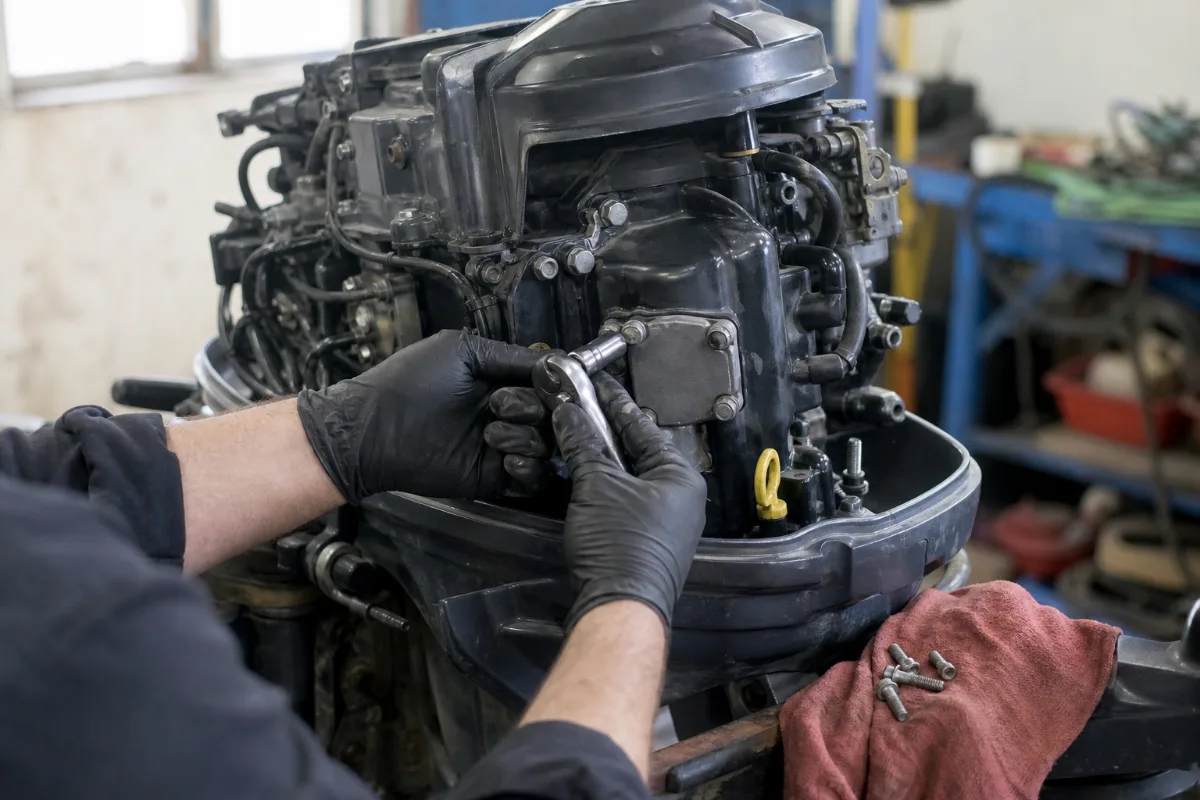
Sometimes every cheap check comes back fine, and the motor still runs hot or the stream stays weak. At that point the trouble is deeper in the cooling system, and honestly, that’s where I stop working on it myself.
- A stuck thermostat. Many outboards have a thermostat, and one that sticks can make the motor run hot. Getting to it and testing it depends a lot on the model.
- Blocked cooling passages. Salt, scale, sand or bits of an old impeller can build up inside the engine over the years. Clearing the passages properly can mean taking apart things I’d rather a mechanic handled.
- Damage from an overheat that already happened. If the motor ran hot for a while before anyone noticed, a compression test is worth paying for before you trust that motor on a long trip.
If I’m honest, the version of this problem that worries me isn’t a weak stream. It’s a motor that ran for 10 minutes with no stream because nobody looked. Glancing at the tell-tale when you leave the ramp is free, and it’s the habit I’d keep if I could keep only one.