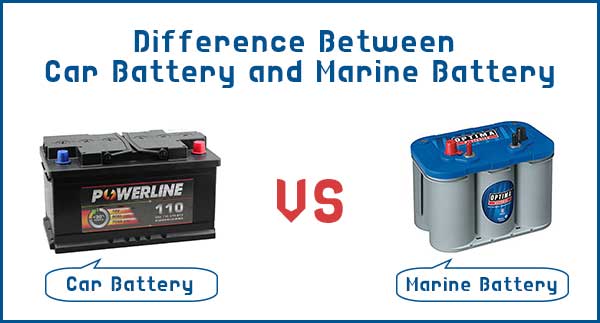
The terms ‘Marine’ and ‘Car’ doesn’t give enough information about the batteries more than one is to be used for boats and the other for cars.
The free trolling motor calculator shows both rules of thumb rather than picking one — and how long the battery really lasts.
But the differences are more complicated. It’s necessary to know how rechargeable acid batteries are made to get a better idea of the differences between car batteries and marine batteries.
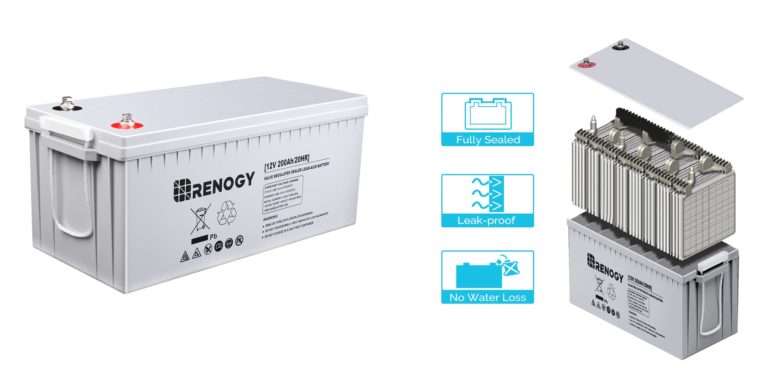
Basically, the lead acid battery has two varying types of lead plates submerged in a light sulfuric acid mix.
The plates react with the electrolytes and create an electrical charge. And, they work as a bridge thus passing the charge through.
So with that, let’s see some of the core.
Differences Between Car and Marine Batteries
Plate Size
There are two kinds of lead acid battery. Starter and Deep cycle. Starter ones have thinner lead plates.
And they are used in cars because they can give more cranking power which helps the car get started.
A deep cycle battery has thicker and less number of plates than a car battery.
As they are not designed to be initially cranking the motor, but rather to keep the engine on, they are used in boats.
Marine batteries also include hybrid batteries, which is like a mix of these two. In a sense, they have thicker and more number of plates.
Voltage
Most marine batteries, like car batteries, supply 12 volts DC. Car batteries have ratings in CA or CCA, which stands for cranking or starting amps and cold cranking amps respectively.
Meaning the number of amps that the battery can provide at 0 degrees Celsius or 32 degrees Fahrenheit for 30 seconds.
Marine batteries might have an MCA or meaning marine cranking amp rating. But a high-grade deep cycle marine battery will get an RC rating.
RC or reserve capacity specifies how long (in minutes) the battery can produce 25 amps while having its voltage above 10.5 volts.
Sturdiness – Car Battery vs Marine Battery
As a boat rides through the water surface, it goes through much more damage because of shaking and vibration. Thus a marine battery is made more solid than a car battery.
Because cars are designed to stay on land, so the batteries don’t need to get through much vibration related damage.
Discharge Capacity
A car battery has more number of thin led plates than a marine battery has. And because of this, initially, it has to discharge high current to start the engine and start the motor.
Whereas marine batteries have to go a long time keeping the engine on. So they have higher discharge capacity.
It’s possible to discharge a typical marine battery up to 20 percent. Sometimes, up to 50 percent if it’s a hybrid battery.
And in case of deep cycle ones, it can be down to 80 percent. In fact, the name deep cycle got its name from the deeper discharge capacity.
Safety – Car Battery vs Marine Battery
Whether you work with car battery or marine battery, use extreme caution while handling them.
Batteries containing Lead acid present a hazardous shock, explosion and burn hazard. Always use hand-gloves and cover your face while working with batteries. And avoid short-circuiting them with any metal wrench or jewelries.
Keep in mind whether that it’s your boat or car, you have to take well care of them and give proper treatment. Thus, always use the best batteries for them to work at their peak.
Also Read: How Long Does A Marine Battery Last
Car Battery vs Marine Battery Conclusion
In the guide, we discussed the differences between car battery and marine battery. And we hope now you have clear idea on this topic.