
For a first day of surf fishing, skip the long cast. Walk the beach at low tide, find the trough, the deeper slot right next to the sand, and fish it with a two-hook rig, small hooks, fresh bait and a 1 to 2 ounce pyramid sinker. Come back for the last couple of hours of the incoming tide. That’s it. The 12-foot rod can wait until you know you like this.
Full disclosure: most of my time on the water is lakes and slow rivers. The beach is the place I’m the beginner, and my first trips out there were mostly me throwing a heavy rig as far as I could, over every fish on the beach. So this is the guide I wish somebody had handed me. The numbers come from people who fish the surf a lot more than I do, a Florida Sportsman sinker guide, FishTalk’s John Unkart on the trough, and On The Water’s Jimmy Fee on rigs, and I’ll say who said what.
Start in the Trough, Not Past the Bar

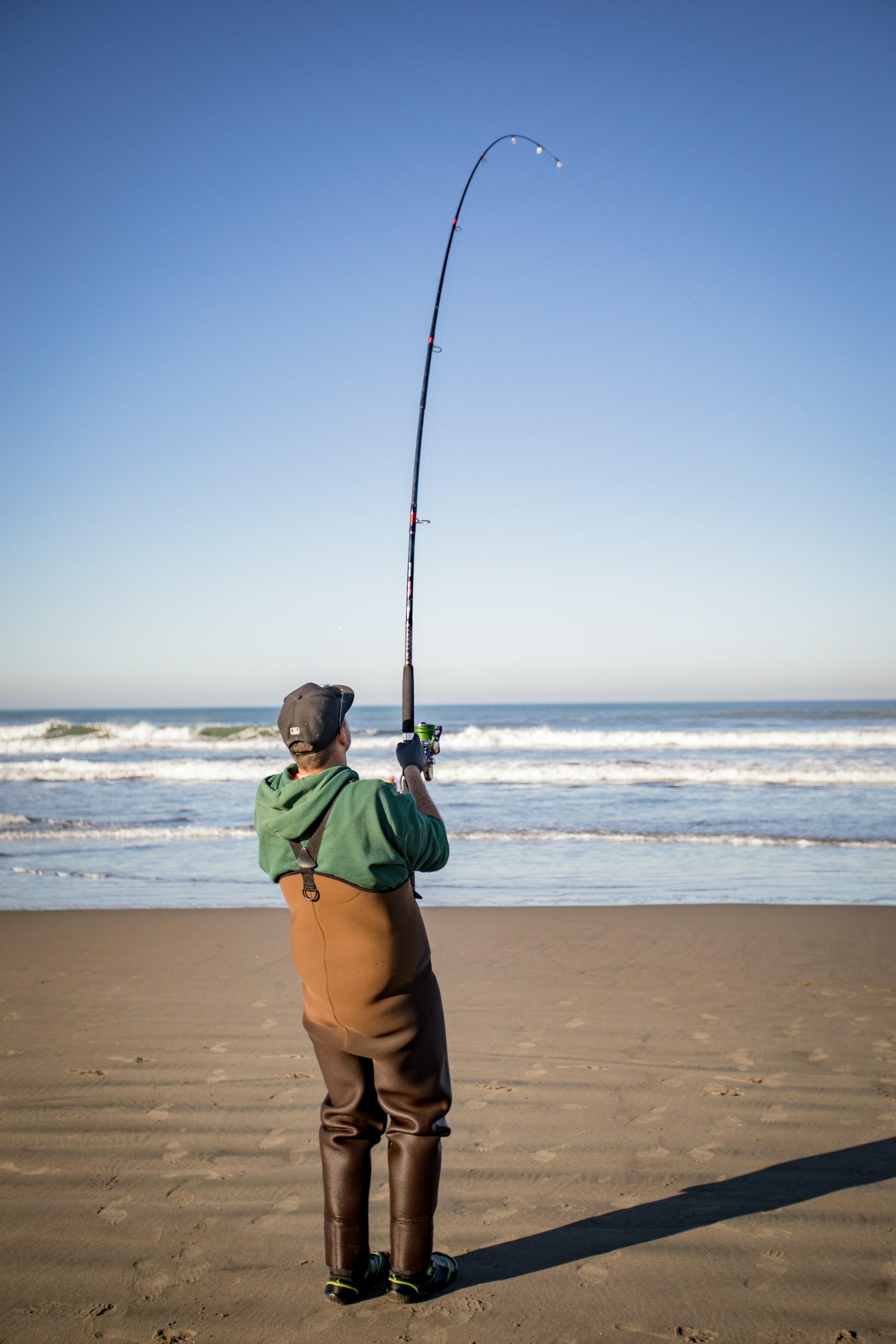
Here’s the mistake I made, and I see it every time I’m on a beach. People wade in to their knees and launch a bait as far as the rod allows. Unkart says that’s often a cast right over the trough and onto the outer sandbar. During high tide fish can be caught crossing the bar, he says, but seldom during low tide with breaking waves. Keeping the bait closer to the beach is sometimes the better move.
The trough is where the food is. Unkart describes crabs and sand fleas moving around in it, plus silversides and small spot. He calls it a buffet for flounder, sea trout and bluefish, plus kingfish and croaker. Florida Sportsman says whiting anglers fish the trough less than 30 yards from the sand. That’s a cast a kid can make.
And that changes what you need to buy. Florida Sportsman says that if the surf is light, with no big wind chop or ground swell, a 1-ounce weight is plenty on a light, 10-pound-class spinning outfit. Unkart says the trough doesn’t need expensive surf gear and you can fish it with a small spinning outfit. If you’ve got a 7-foot spinning rod for bass, honestly, bring it.
The long rods have a job. Florida Sportsman explains that pompano can sit from the trough out to about 50 yards at high tide, then drop out to the next bar or deeper water some 75 to 100 yards out. That’s why you see 11- to 13-foot rods standing in sand spikes. It isn’t the fish that needs the big tackle. It’s the distance and the surf. Learn the close water first, and you’ll know if you need the reach. If you’re picking a reel for that bigger rod later, I’ve written up what size reel for surf fishing makes sense.
Read the Beach at Low Tide

Unkart’s description of the trough is the best one I’ve read. Wade in and you’ll notice a drop-off where the water suddenly comes up to about your waist, or deeper at high tide. You’ll often feel shells under your feet when you step into it. At dead low tide that drop-off may be just a few feet from the sand. At high tide it can sit 50 or more feet off the beach, depending on how steep the beach is.
So I walk the beach at low tide first, before I rig anything. That’s when you can see the shape of the bottom. Waves break where the water gets shallow, so a line of breakers offshore marks the bar, and the calmer band between it and the beach is the deeper trough. A gap where the outer waves don’t break is a break in the bar. On a lake I’d read a weed line or a point. Here you’re reading where the waves break.
Take a picture of a spot you like with your phone, with something on the dune behind it you can find later. When you come back on the rising tide, the water will cover all of it, and the beach looks totally different. I learned that one the dumb way.
Two Rigs, and When Each One Earns Its Place
You can buy a wall of surf rigs at a tackle shop. Two do most of the work, and Jimmy Fee at On The Water explains both.
The high/low rig puts two hooks above the sinker, on separate drops. You get two baits out at once, and a better shot at a double. The catch is the fixed weight. A fish that picks up the bait feels the lead right away, so Fee says you need to set the hook quickly, and that the rig works best with smaller, softer baits like clams or worms. Unkart uses the same idea in the trough, a basic two-hook top and bottom rig, with number 4 or number 6 hooks.
The fish-finder rig is one hook on a leader behind a sliding sinker. When a fish takes the bait, the line slides through and the fish doesn’t feel the weight, so you can drop back and let it eat. Fee calls it ideal for large pieces of bait, the rig for bigger fish. One tradeoff he points out: a longer leader means more wind resistance and a shorter cast.
Start with the high/low. It’s cheap, it’s simple, and the fish in the trough are mostly small. Unkart says most kingfish and spot you’ll catch there run under a pound. Big hooks just mean missed bites. If you do switch to a fish-finder with circle hooks, Fee says there’s no need to set the hook. When you feel the weight of the fish, wait a few seconds and reel down. And if you’re fishing bait for striped bass, he notes that inline circle hooks are required.
How Much Lead It Takes to Hold the Bottom

Lakes taught me nothing about this. In a lake the bait stays where it lands. In the surf, the current walks it down the beach, and if you’re using too little weight, your rig ends up in the next guy’s lines. Florida Sportsman puts surf sinkers anywhere from 2 ounces up to 8, depending on conditions.
The thing to match first is the rod. Florida Sportsman warns that the lightest spinning rods, the ones rated for lures up to 1 ounce, mustn’t be overloaded with 3 ounces of lead. The tip collapses on the cast and you won’t get far. On a 10-pound outfit in light surf, 1 ounce is plenty. Step up to a 12-pound outfit and a 2 or 3 ounce bank sinker, the teardrop one that lies flat on the bottom, holds fine in calm water. Unkart says a 1 or 2 ounce pyramid does it when the ocean is calm.
The first time the wind picked up on me at the beach, my bank sinker started rolling and the pyramid held. Florida Sportsman says the 4-sided pyramids hold a sandy bottom better than the 3-sided ones, so that’s what I buy now. For rough water with a long cast, there’s the Sputnik, a sinker with wire arms that dig into the bottom and fold back when you reel in. The article puts them at about 5 to 6 bucks each, more than a pyramid, and says they’re worth it in extreme surf. On a first day, you won’t need them.
Fresh Bait Beats the Scented Stuff in the Surf

Unkart’s bait list is short and practical. Small pieces of bloodworm. Peeler crab, cut small. Clams, shucked, then cut so each bait has a piece of the foot, since that’s the toughest part and it stays on the hook. Squid strips, cleaned by scraping the skin off and cut into thin pieces. And sand fleas, the little crabs you can dig right at the waterline.
The part that surprised me was his test. He ran scented baits against fresh natural bait several times and says he has yet to see the scented bait out-fish fresh in the surf. He’s careful to say that’s not true everywhere. In a bay for flounder or for schoolie stripers, scented bait on a bucktail can out-fish natural bait. Just not on the beach, in his experience.
I’d add one thing from the lake side. Bring more bait than you think. Small hooks and small fish mean a lot of bait gets stolen, and nothing ends a beach day faster than running out at the exact moment the fish turn on. A cooler with ice for the bait and a separate one for drinks keeps everybody happy.
Fish the Moving Tide and the Low Light

Timing matters more than gear. Unkart says dead low tide may not be very productive in the shallow water. The windows he likes are the last two hours of the incoming tide, the turn, and especially the first couple of hours of the outgoing. If those line up with first light or the hour before sunset, even better, because fish like feeding in the trough in low light.
So the plan for a first day writes itself. Check a tide chart the night before. Show up at low tide to walk and read the beach. Rig up as the water starts coming back, and be fishing the trough for the last two hours of the incoming. If you want a refresher on picking times in general, my post on the best time of day to go fishing covers the lake side of it. Fall is a good season to try, too. Florida Sportsman’s article opens by saying surf fishing cranks up when fall arrives in Florida.
The Ocean Is Not a Lake

I’ll keep this one straight. The trough is the place to fish, and it’s also a drop-off. Unkart describes it as water that suddenly comes up to about your waist, deeper at high tide. You don’t need to stand in it to fish it. Cast from the sand.
The National Weather Service has two warnings worth taking to the beach. Check the local beach forecast before you leave and talk to the lifeguard when you get there. And don’t assume good beach weather means safe water, because rip currents often form on calm, sunny days. The NWS also says never to turn your back on the ocean, which is exactly what you do when you’re re-baiting with your back to the waves.
Check your state’s saltwater fishing license rules before you go. Same for the size and bag limits on whatever you might catch. They vary by state and by species, and the beach is not where you want to find out. For the general basics, from knots to casting, my list of fishing tips for beginners still applies. The ocean just adds the tide, the wind and a lot more sand in your reel.